
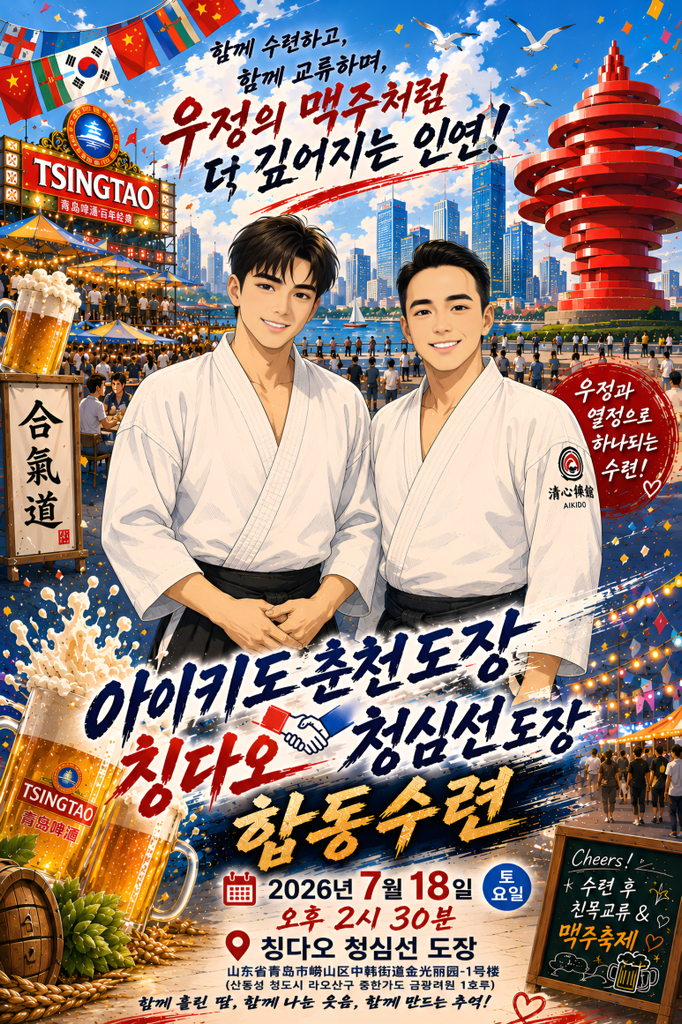
Joint Training with Cheongsimseon Dojang at the Qingdao Beer Festival
While visiting Qingdao to coincide with the Qingdao International Beer Festival, I once again paid a visit to Cheongsimseon Dojang in Qingdao.
The Qingdao International Beer Festival had been on my bucket list ever since I started traveling to China for business back in 2017. This time, after passing my regular quality certification review and earning some reward leave, I planned my trip to line up with the festival. Even though I had already visited Qingdao many times before, I had never once made it during the festival itself.
It was a moment where one item on my personal bucket list finally came true.
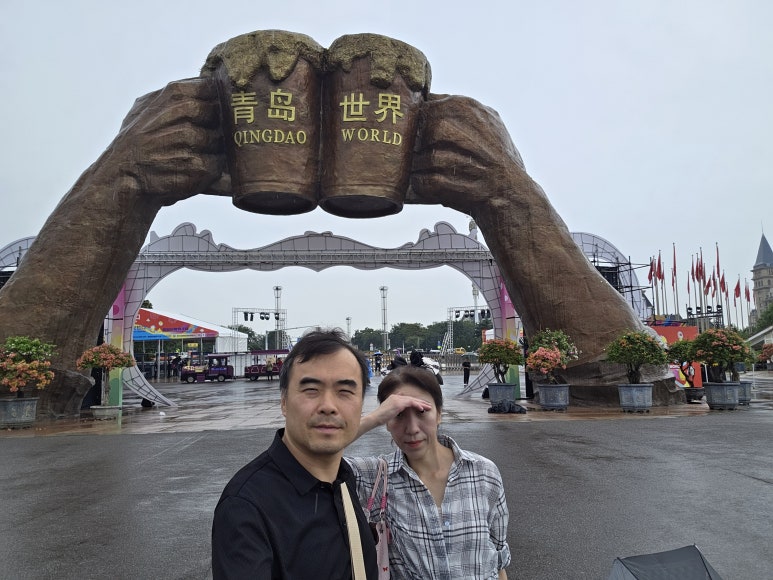
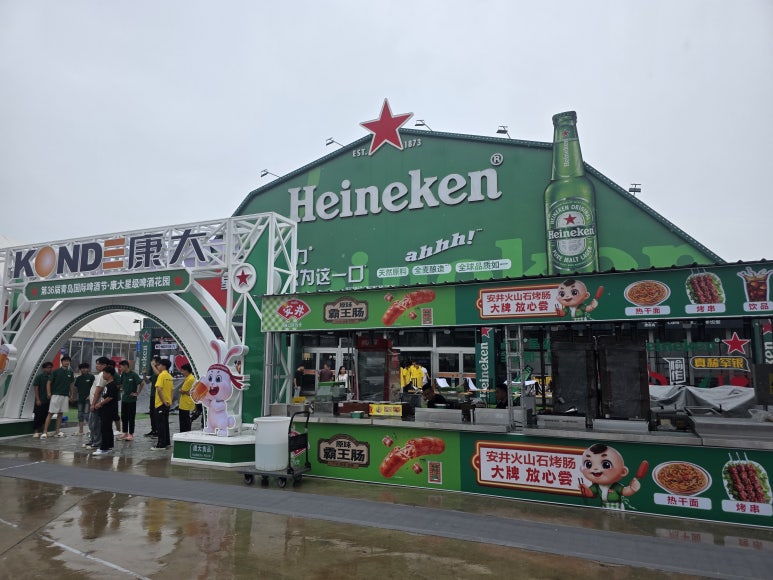
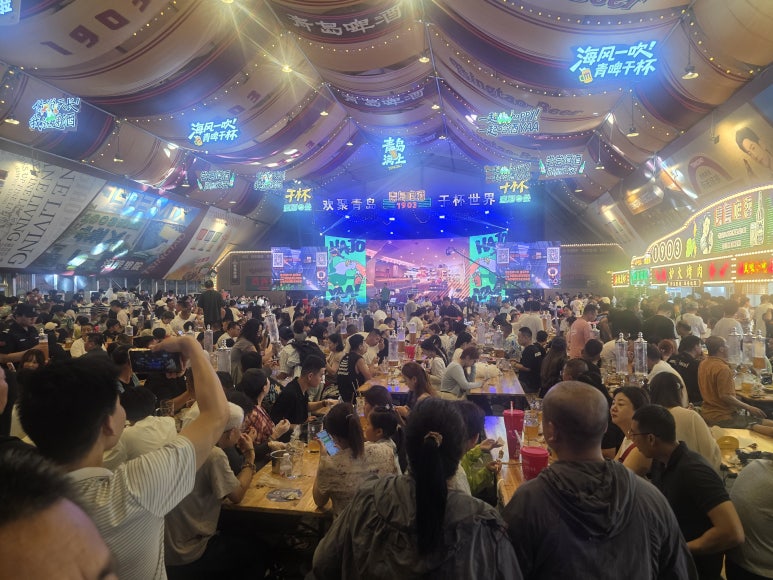
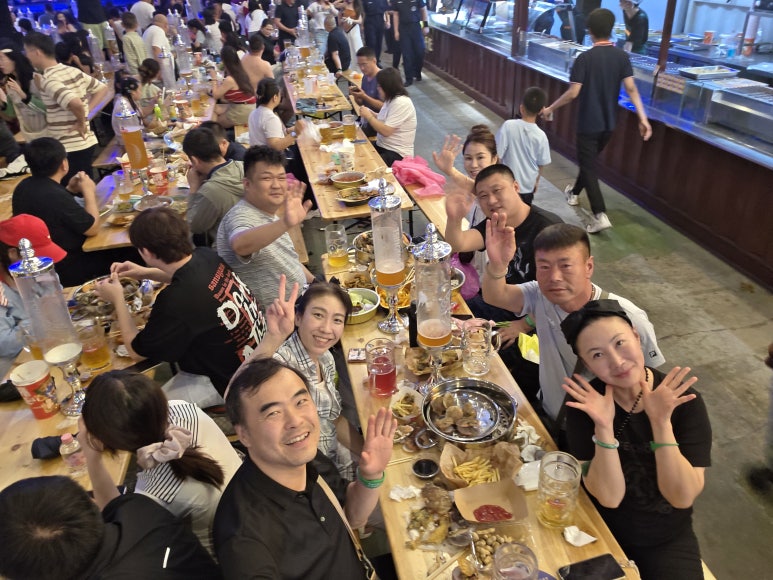
Wanting to squeeze out every extra hour in Qingdao, I chose a late-night flight after work. By the time I landed, it was already past midnight, and the subway had already stopped running for the night. In the end, I had to take a Didi (滴滴) — China’s ride-hailing app — and didn’t reach my lodging until the early morning hours.
With roughly 2,000 beer brands from around the world taking part, the Qingdao International Beer Festival was, without question, the largest festival I had ever seen in my life. And being able to spend this festival together with the Aikido members of Qingdao was, for me, a source of tremendous joy in its own right.
Cheongsimseon Dojang in Qingdao is led by dojang head Shan Xiangyu (单翔宇), who holds a 5th-degree black belt from the Aikikai. On this particular visit, though, since the dojang head was recovering from an injury, I was asked whether I might be willing to lead the training session myself.
At first, I politely declined. Our group had simply come because we loved Aikido and wanted to join one of Master Shan’s classes — we had no intention of teaching it ourselves. On top of that, my Chinese really wasn’t good enough to run a class.
But after hearing them say, “Even if the words don’t all get through, it’s enough if everyone can just follow the movements,” I ended up agreeing to do it.
清心禅合气道 (Cheongsimseon Aikido)
Address: Jinguang Liyuan Building 1, Zhonghan Subdistrict, Laoshan District, Qingdao, Shandong Province
山东省青岛市崂山区中韩街道金光丽园-1号楼
Dojang Head: Shan Xiangyu (单翔宇)
Instructor: Zhang Shuai (张帅)
https://j.map.baidu.com/58/5JtM
Cheongsimseon Aikido is located in Laoshan District, Qingdao.
The street it sits on is called Zhonghan Street (中韩街), literally “China-Korea Street” — I couldn’t help but feel it symbolized the friendship between our two countries.
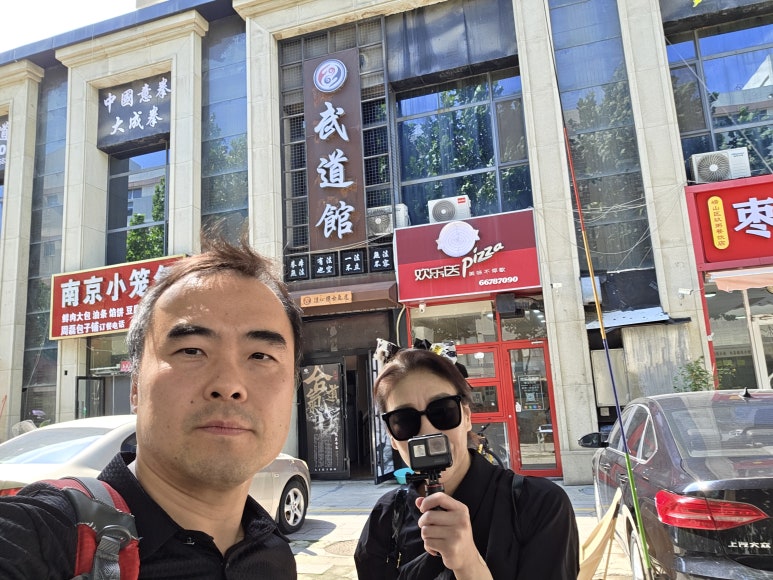
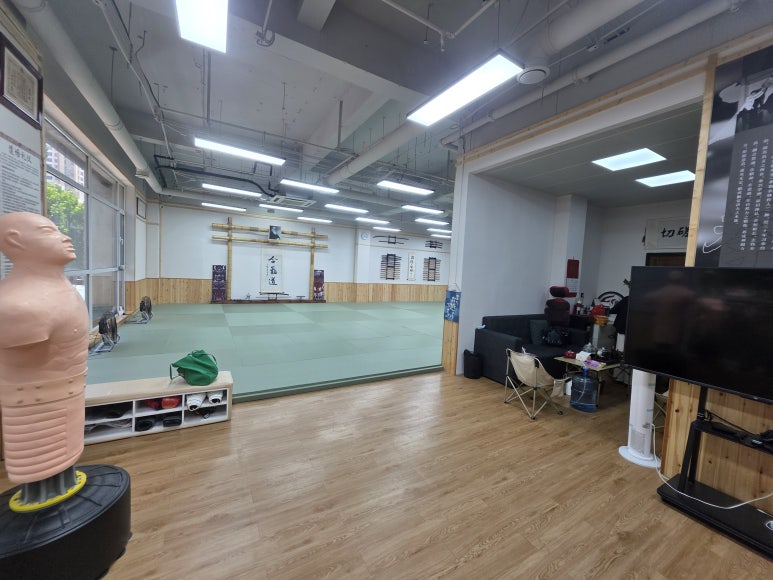
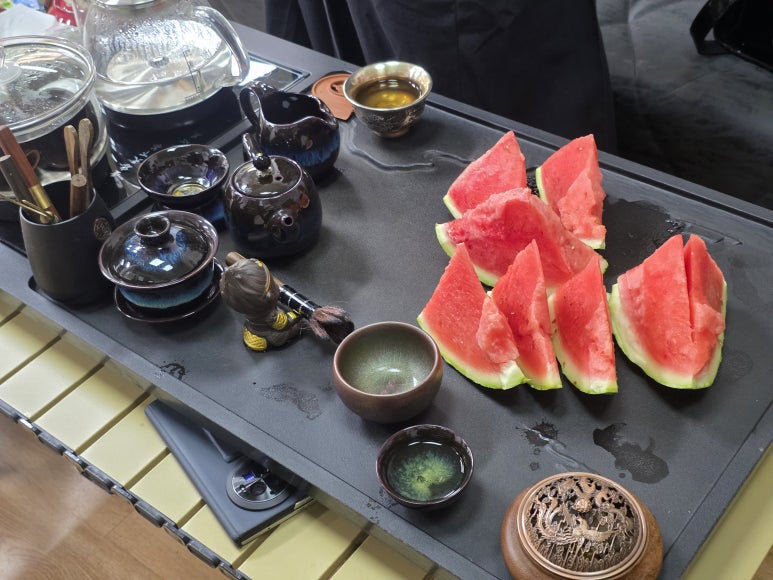
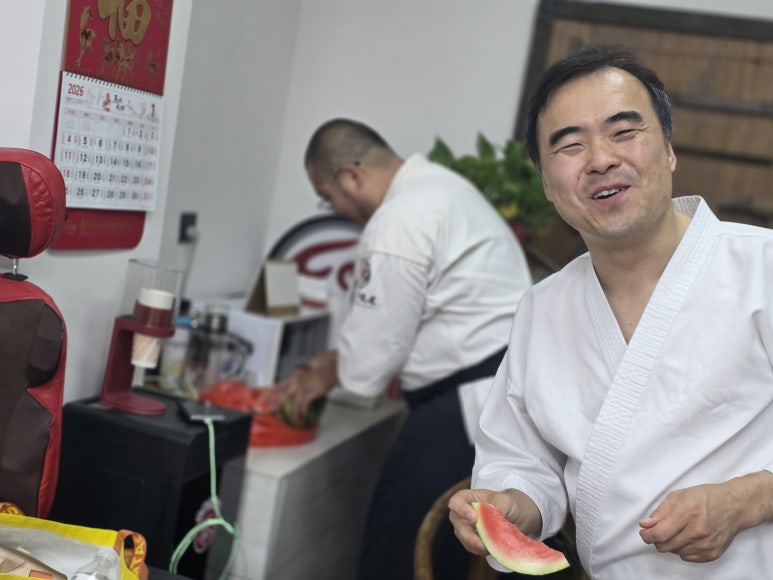
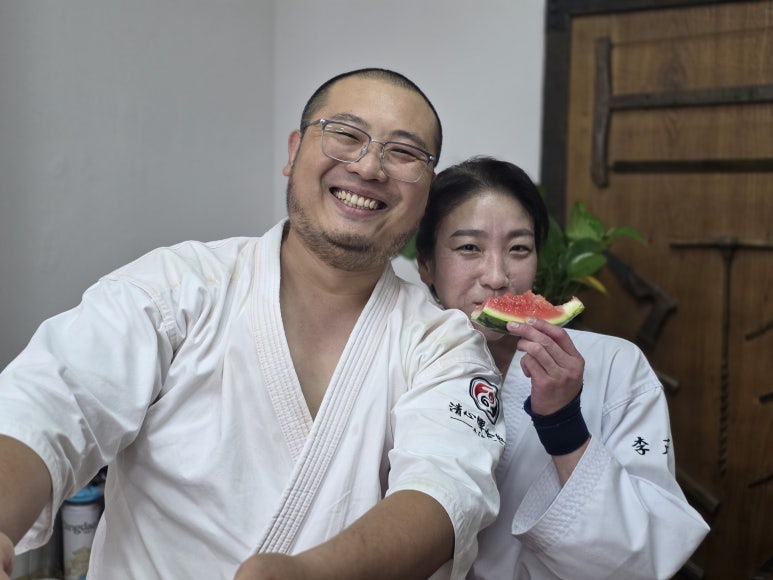
Instructor Zhang Shuai of Cheongsimseon Dojang in Qingdao, carefully slicing watermelon for us
Having last visited on New Year’s Day, I was returning to Cheongsimseon Dojang for the first time in about six months, and I found it had become considerably larger and more comfortable than before. Every dojang in China, in keeping with traditional Chinese tea culture, always keeps a tea table set up. Since the space that used to hold the tea table had now been expanded into the training area, the tea table’s location had shifted, and the position of the tatami mats had changed slightly as well. The space had changed, but the unique atmosphere of Cheongsimseon Dojang remained exactly the same.
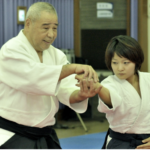
The dojang head was absent, laid up with a back injury, but instructor Zhang (教练, jiàoliàn) warmly welcomed us and brought out some cool watermelon. The watermelon in Qingdao was wonderfully sweet, refreshing, and delicious. After sharing a cup of tea together, we got straight into the class.
Honestly, I had been fairly worried before the class began. My concern was whether the subtle differences between the fundamentals the dojang head usually teaches and the way I explained things might end up confusing the members. So after giving it a fair amount of thought, I chose to focus this particular class on technical themes that the Qingdao dojang likely didn’t cover often. Since it went in a somewhat different direction from their usual curriculum, everyone seemed to enjoy the session and train with real satisfaction.
As for the language barrier I’d been worried about, that worked out too — there happened to be members fluent in English, so I was able to run the class in English. It made me resolve to practice my Chinese more seriously, so that if I ever get the chance to teach a class again, I’ll be able to do it in Chinese.
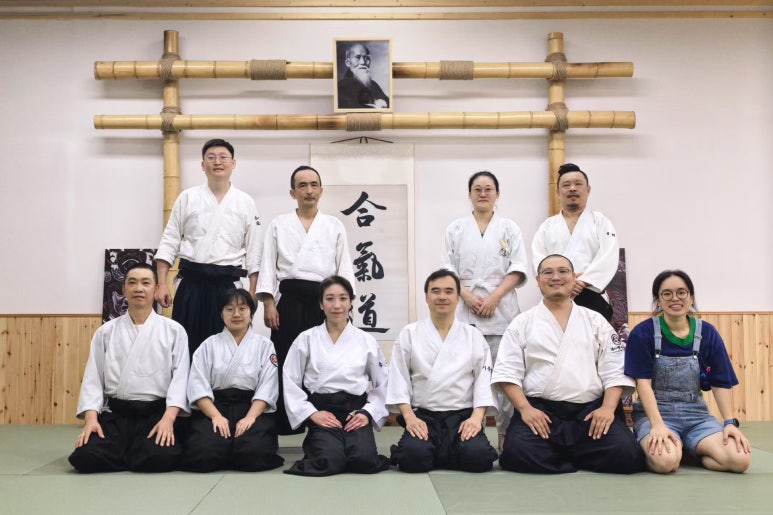
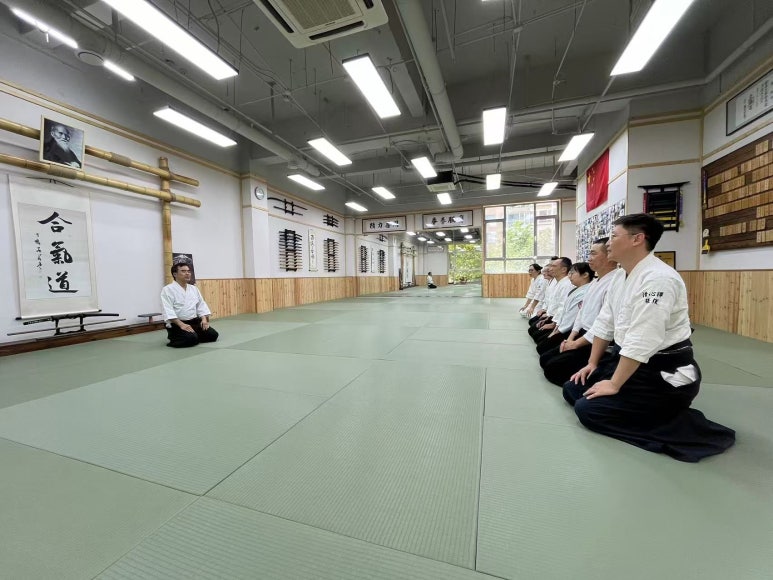
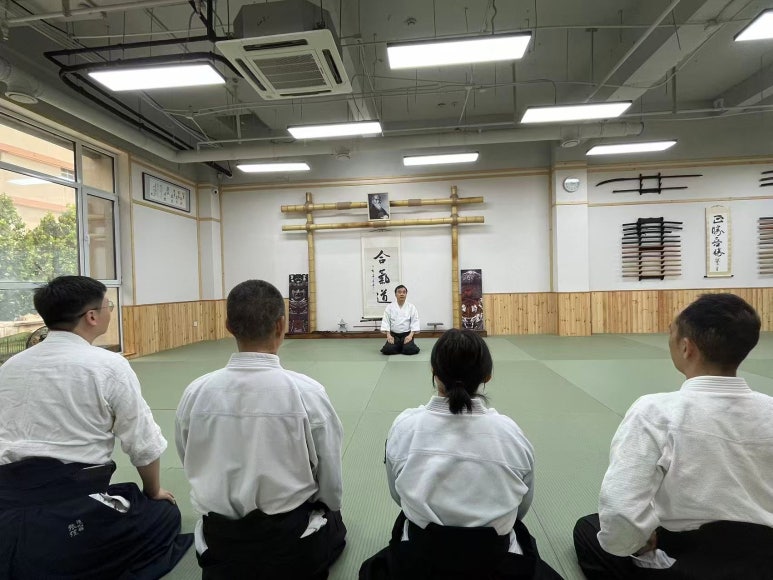
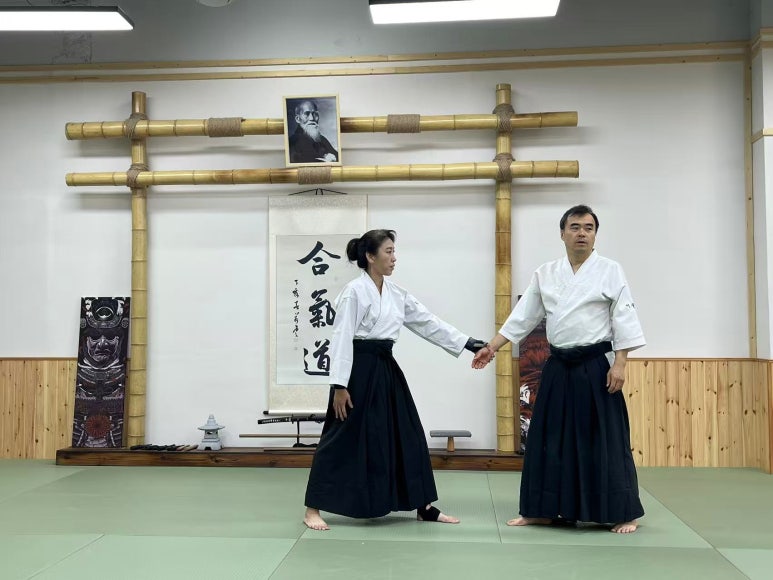
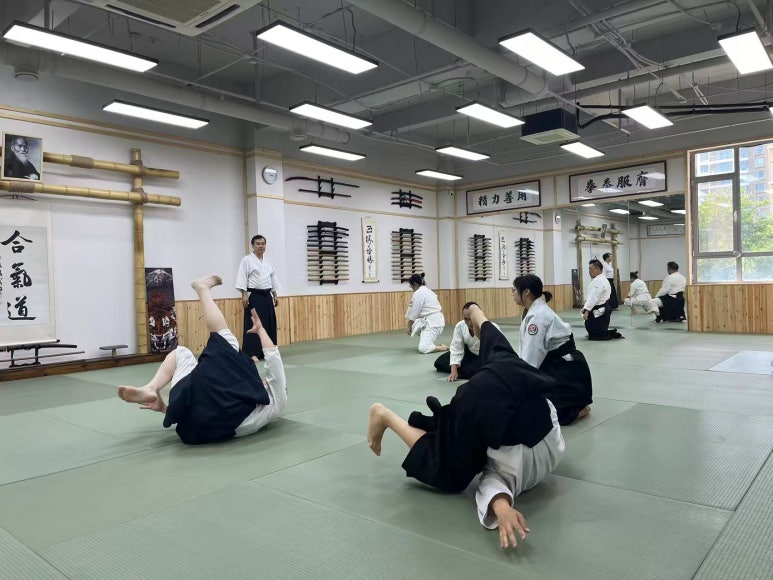
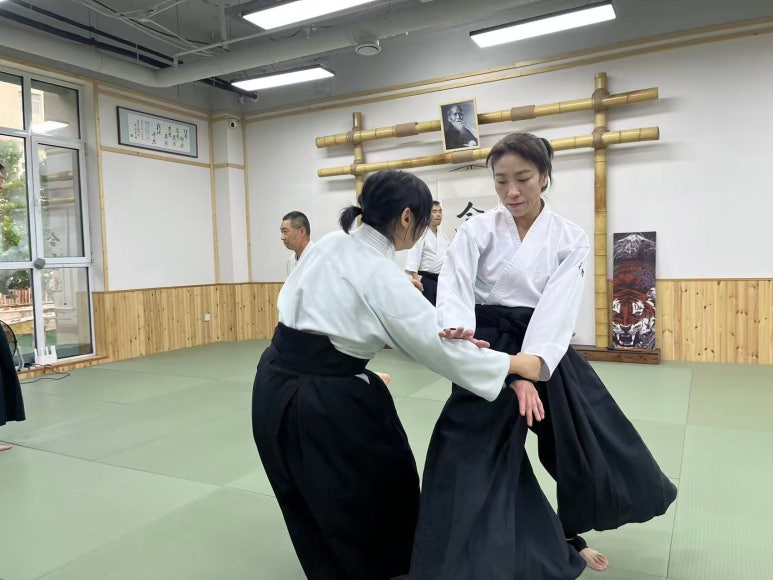
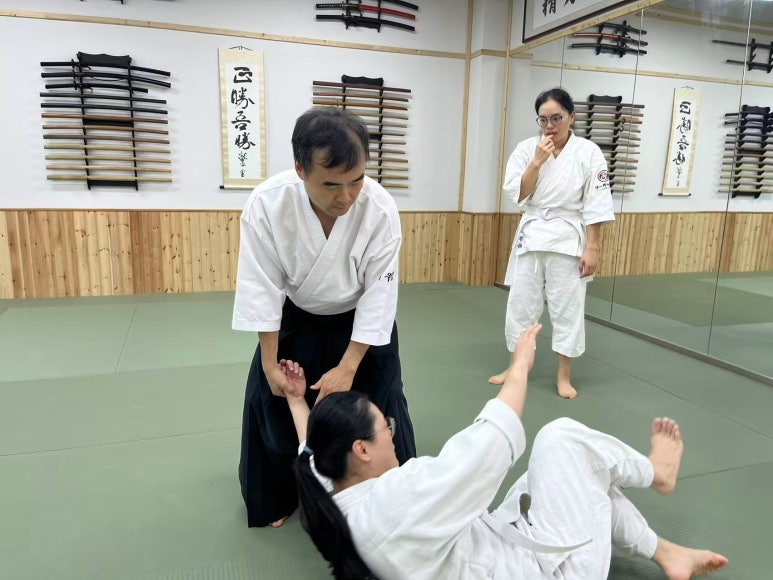
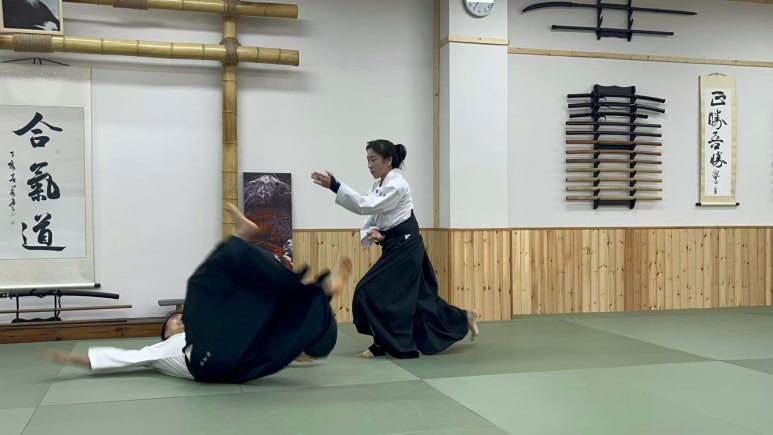
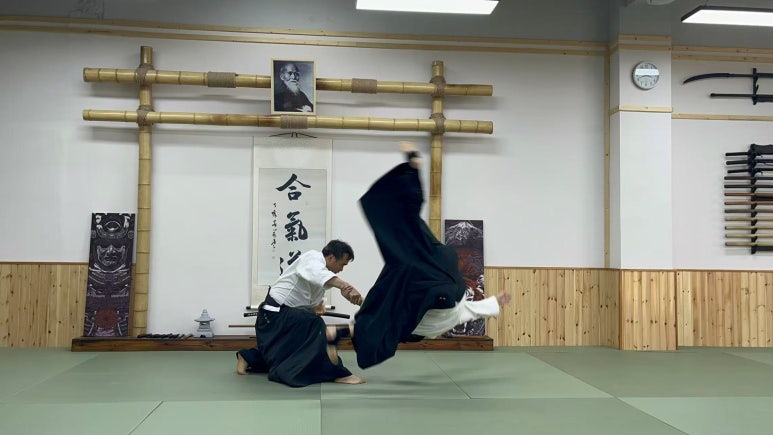
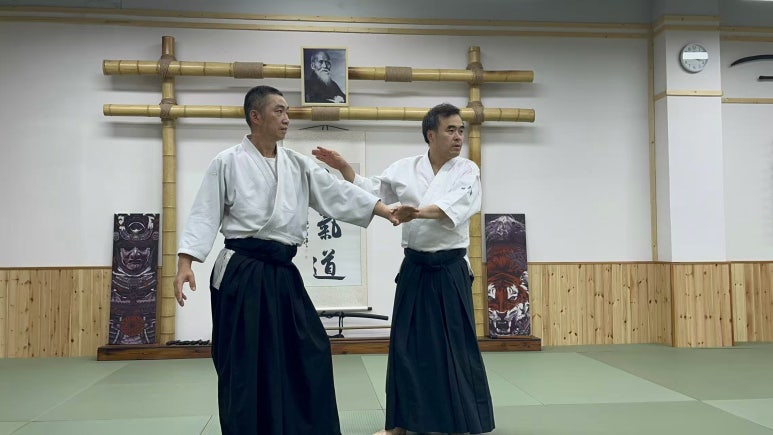
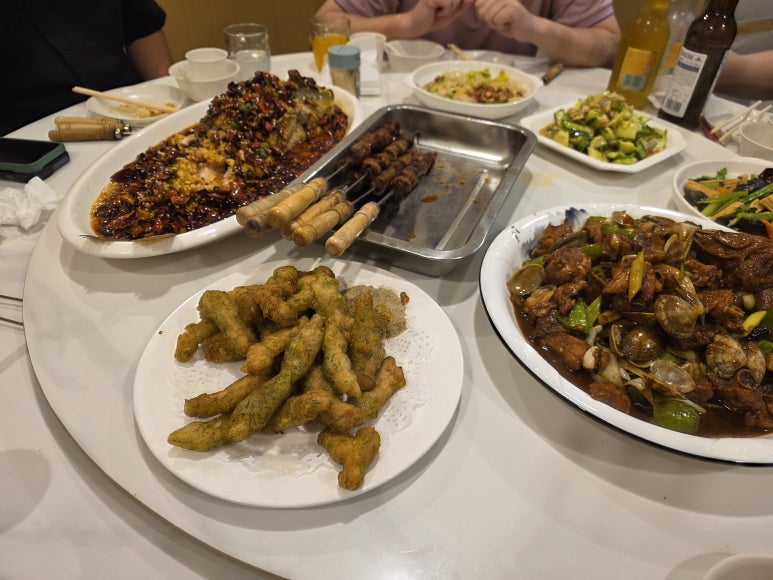
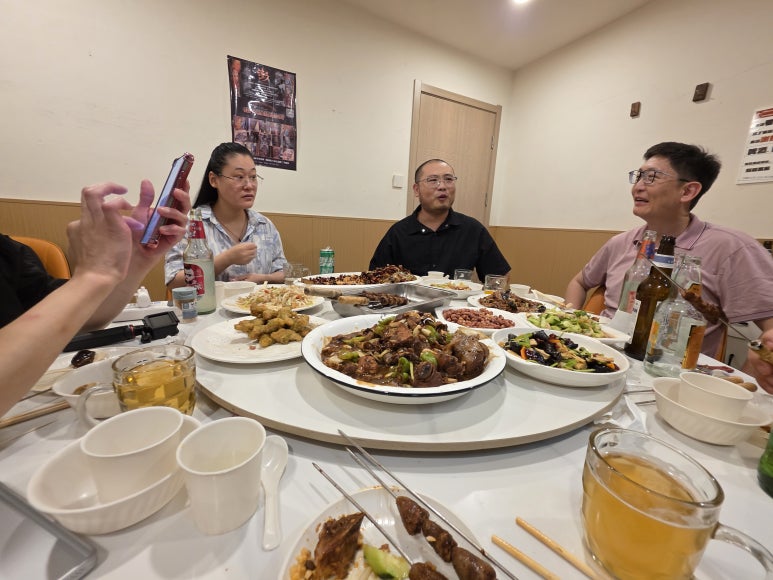
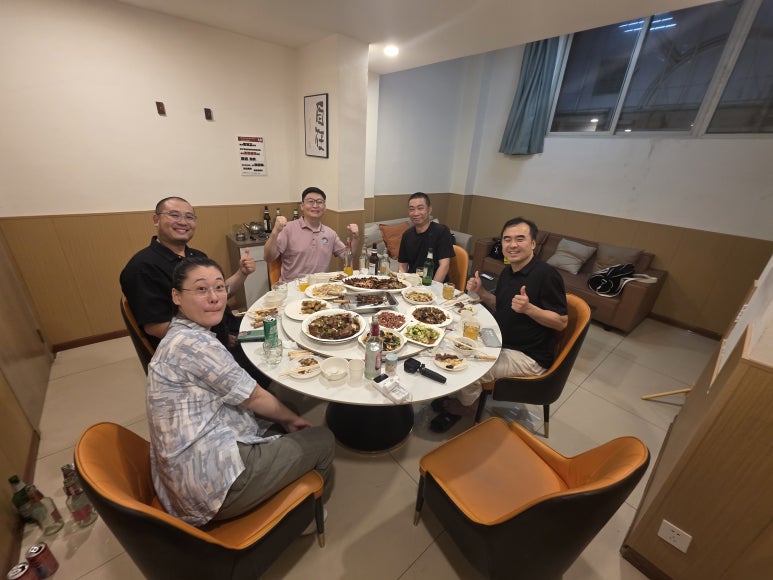
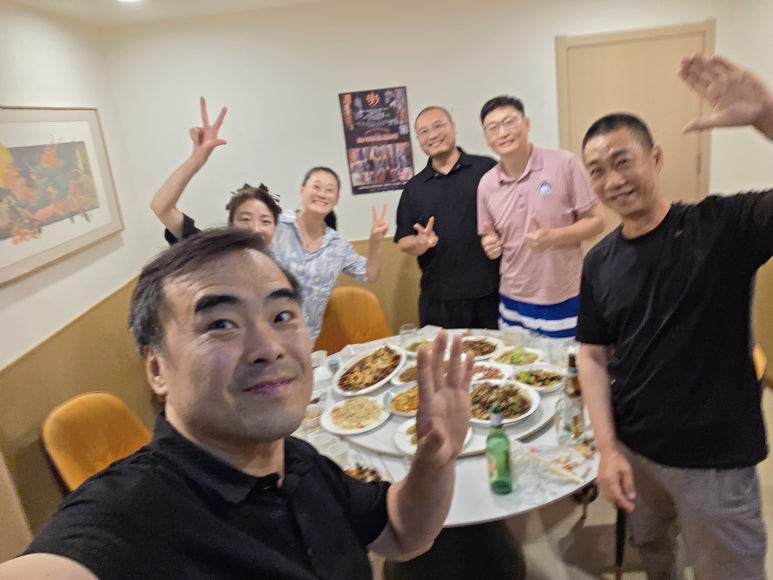
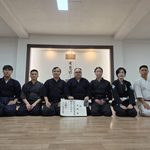
After training wrapped up, just like last time, we all headed to a restaurant together for a lively meal.
This was our second meal together as a group. Where our first conversation had mostly covered the basics of Korean and Chinese Aikido culture as we were just getting to know each other, this time our conversation went a good deal deeper. Apparently the decline in Aikido practitioners is a worldwide phenomenon, and it’s a real concern in China as well. In particular, during the week I spent in Qingdao, I noticed that as relations between China and Japan have cooled, many Japanese-themed restaurants have shut down, while Korea-themed restaurants have been popping up everywhere.
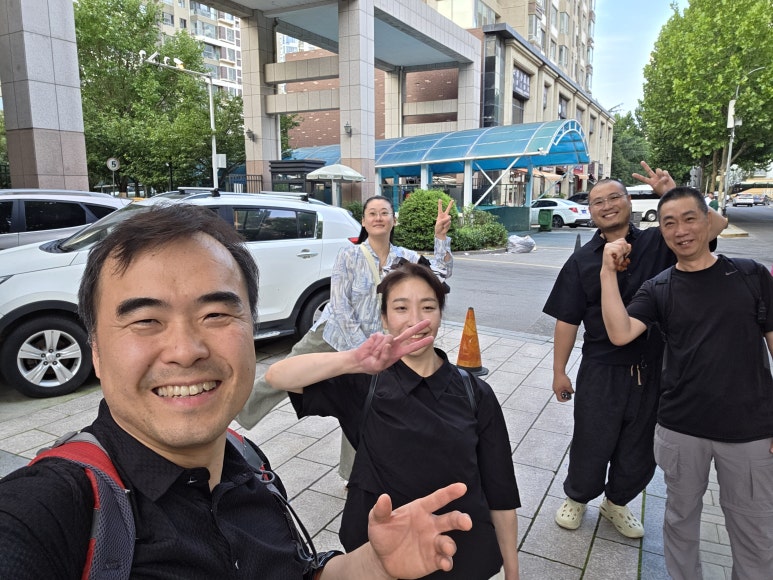
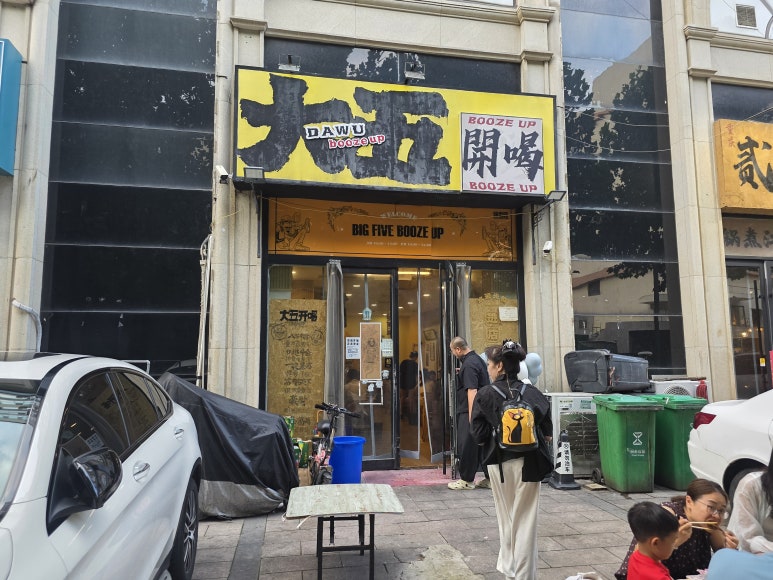
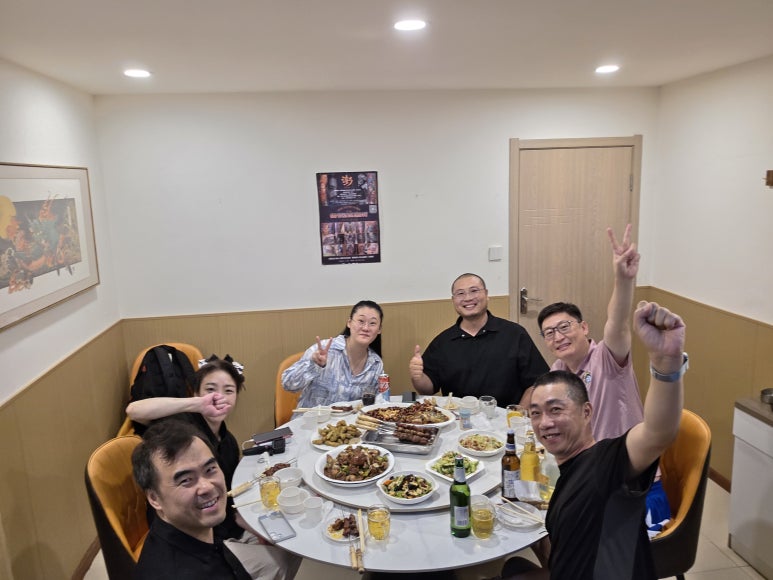
Along the same lines, I learned that Taekwondo is thriving remarkably in China. I was told there are already more than 500 Taekwondo academies operating just within Qingdao, and that they’ve come to dominate the market for children’s martial arts training. As Korean and Chinese practitioners of a Japanese martial art meeting together to train Aikido in a Chinese dojang, it left me with somewhat complicated feelings.
We also talked at length about how the traditional relationship between teacher and student has broken down significantly in both Korea and China today.
What I found interesting was that the very same phenomenon is happening in China as well.
The members joining us for dinner had grown up in a generation that experienced corporal punishment in school. But today’s China, just like Korea, has banned corporal punishment in schools, and teachers are strictly forbidden from ever striking a student.
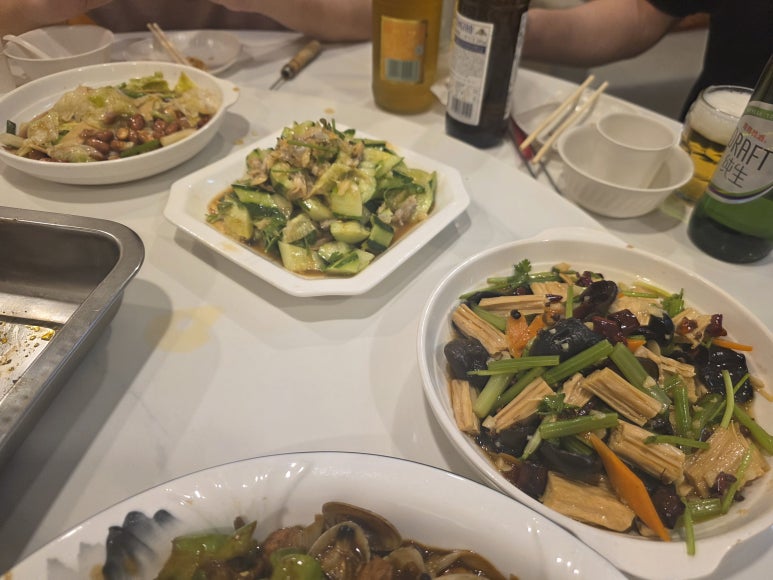
They also told me that in China too, just as in Korea, the culture of students respecting their teachers the way they once did has weakened considerably. Aikido, through its very etiquette of practice, still retains a lot of that traditional teacher-student atmosphere. Personally, I consider this one of Aikido’s greatest charms — but I also found myself wondering whether, in this current transitional era, that very trait might be one of the reasons it hasn’t translated into growing numbers of practitioners.
Even so, I found myself thinking that, much like how personal, hand-crafted calligraphy is now valued more than printed computer text, given a little more time, a preference for this kind of traditional teacher-student martial art might well come back into fashion.
When I mentioned that we’d be holding joint training and a joint rank examination on July 26 to mark the 16th anniversary of Chuncheon Dojang’s founding, every member at the table said they’d love to visit at least once.
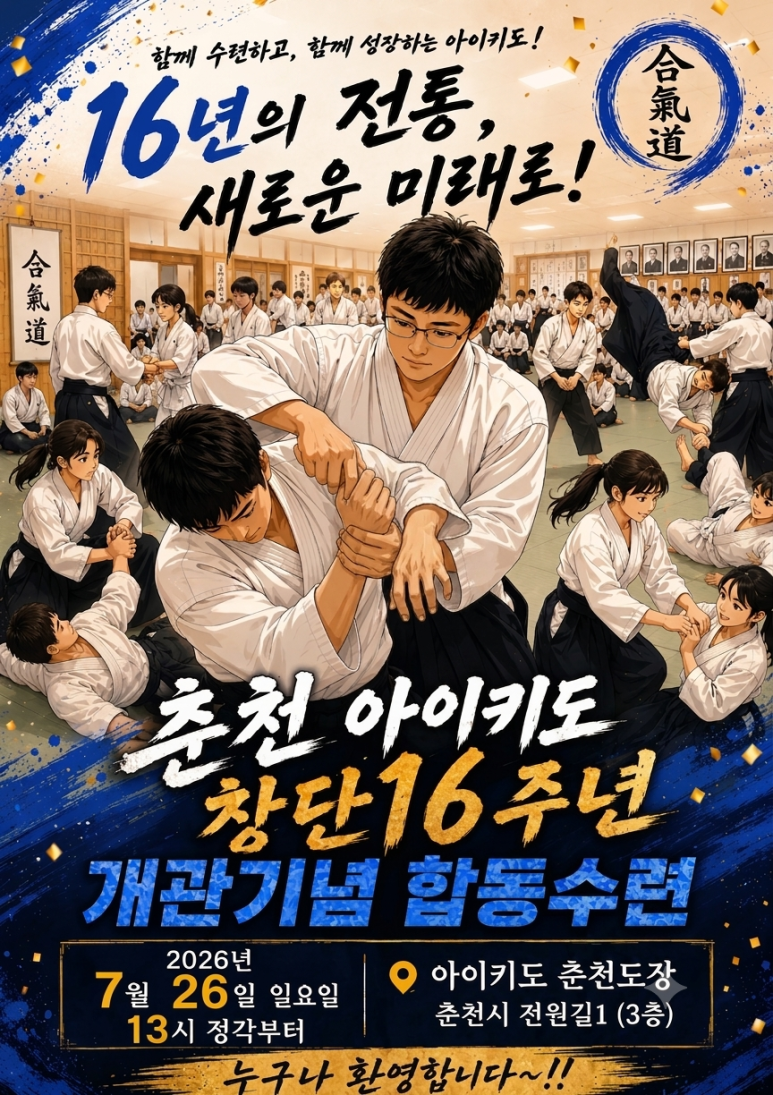
Unfortunately, due to visa issues and work schedules, none of the Chinese members were able to attend this year’s 16th anniversary event. Just as members from Miyakojima once joined us for training in Chuncheon, I hope the day comes when members of Cheongsimseon Dojang can visit Chuncheon Dojang and train together with us at next year’s anniversary event.
I want to extend my heartfelt thanks to everyone at Cheongsimseon Dojang in Qingdao, who always welcome us so warmly and generously give up their precious time to spend it with us.
We stayed in Qingdao until the 22nd, and departed for home on the night flight of the 22nd.
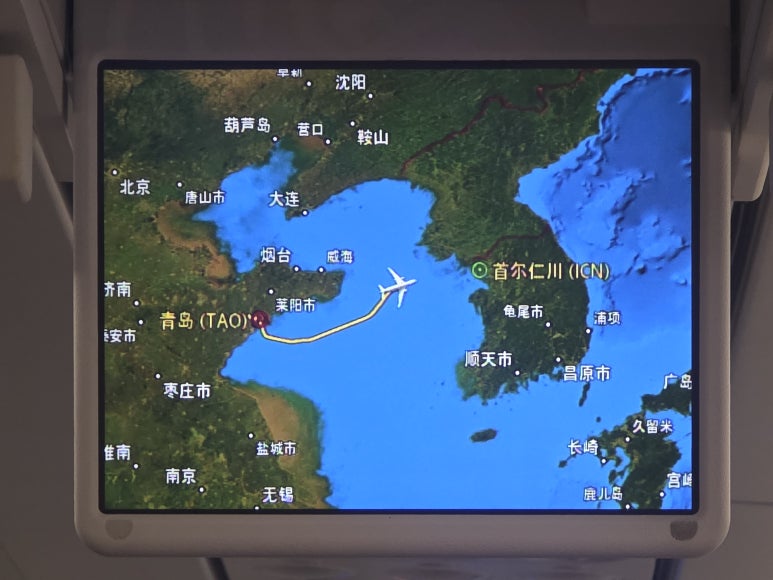
Shortly after the plane took off, the internet connection cut out. And yet, when I happened to open Baidu Maps just before that, it showed our flight passing directly over Cheongsimseon Dojang.
Our plane, having just taken off, was flying directly over Cheongsimseon Dojang.
Looking out at the night skyline of Qingdao lit up below, I said a quiet prayer for the health and peace of the dojang head and every member, right there above Cheongsimseon Dojang in Qingdao.
Once again, I want to express my deep gratitude and respect to all of our fellow Aikido practitioners in China.
[Traditional Hapkido / Aikido Chuncheon Dojang]

Ahh~~~ I want to go too.
But alas, my body just can’t handle drinking anymore these days…
Enjoyed reading your awesome review!
Enjoyed reading this. I’m so jealous, especially of that authentic mainland Chinese food…. Cheering on the Chuncheon dojang as it keeps expanding energetically, from Okinawa to Qingdao~