Back to being a student
A record of my October 2026 Aikido training trip to Japan
From October 10th to the 18th, I went to Japan for 9 days and 8 nights.
This time, too, the center of the trip was training at Aikikai Headquarters. Around the headquarters training, I met teachers and friends I’ve known for a long time, and I also received invitations to visit and participate in training at other dojos.
Every time I go to Japan, I meet many different people and have new experiences, but this time, one thought in particular stayed with me for a long time.
Why do I keep going to Japan to train?
In Korea, I run a dojo and am in the position of guiding members. Because I hold a rank, there are many occasions when I have to explain techniques or share my opinions with others.
The more that happens, the fewer people there are who will honestly tell me, “That’s not quite right,” when I get something wrong.
In that sense, this trip to Japan was a time to return to being simply a student again.
This trip’s training began at Gessoji, near Kichijoji
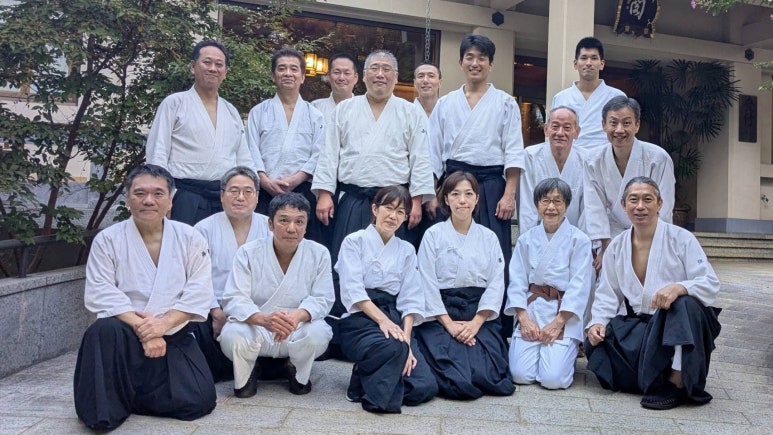
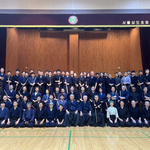
On October 11th, I visited Gessoji (月窓寺), near Kichijoji (吉祥寺).
I went to take part in the autumn demonstration and the training session beforehand, held by the Musashino City Aikido Federation. Gessoji is an old temple, and it’s also well known as an Aikido training space—the dojo here is one that Tada Hiroshi Sensei guided for many years.
This opportunity to participate came through the kindness of my senior, Koyanagi Sensei, who always takes such care of me.
It was also a good experience, in a different atmosphere from the usual headquarters dojo, to see trainees of various ages training and practicing together.
This time Tada Sensei himself did not personally lead the training, but I was able to pay my respects to him.
Though the first day was long, it was a very good start to this trip.
Back to Headquarters Dojo
From the next day on, I trained mainly at the headquarters dojo.
October 12th was a Japanese public holiday, “Sports Day.” Unlike on weekdays, the headquarters dojo only held one morning session led by Doshu that day, and no training fee was charged. They said it was meant to honor the meaning of Sports Day together.
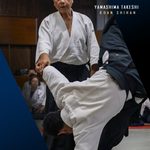
That day I was paired up with Yamashima Sensei for a session and trained together.
The following day, the 13th, I attended Doshu’s class again.
While practicing shihonage that day, Doshu personally watched my movements and pointed out one thing.
Rather than trying to pull your partner off balance with your arm, you should use more taisabaki (body movement, 体捌き).
It’s a very basic point.
And yet, that very basic point has stuck with me for a long time.
The higher your rank and the more familiar you become with the techniques, it’s easy for there to be moments when you think, “I already know that.” But the body doesn’t move as precisely as the mind thinks it does.
Hearing a basic correction again, for a movement I thought I already understood—that might be one of the reasons I keep going back to headquarters.
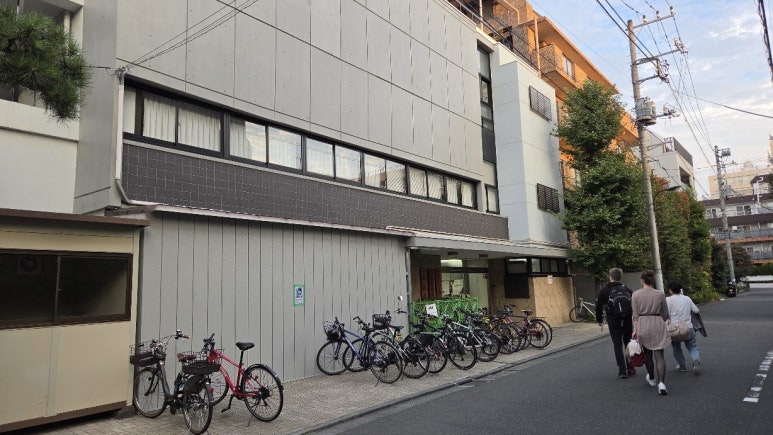
Meeting the Generation Who Trained Directly Under the Founder
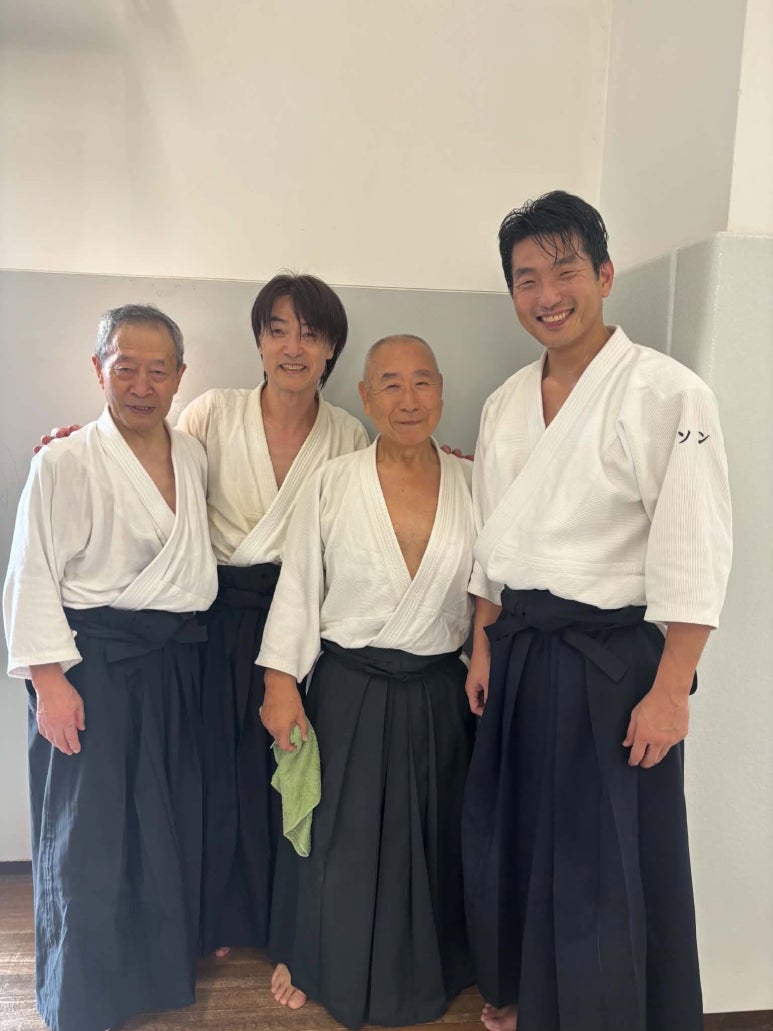
What left a particularly strong impression on this trip was spending time with senior practitioners who have trained at headquarters for a very long time.
After training, I went to drink coffee with Yamashima Sensei, and ended up sitting together with Mr. M, Mr. W, and Mr. S.
All three are members of the generation who directly experienced the Founder’s teaching during his lifetime.
Mr. W, among them, said he is 90 years old this year.
After we finished our coffee, on the way back toward the dormitory, Mr. W suddenly asked me to try grabbing his hand.
And right there on the street, he spent quite a while explaining something while actually using his body to demonstrate.
It was a story about when a connection is made, where you move on the line, and how you form the relationship with your partner’s timing.
Mr. W, walking with a cane, kept holding my hand and explaining directly with his own body.
What impressed me most wasn’t the technique itself, but his attitude of wanting to pass something on.
It was a situation where he could have simply exchanged a quick greeting and we could have parted ways, but even as we were parting, he told me he hoped things would go even better the next time we met.
That scene has stayed with me for a long time.
After that, at the headquarters training, I was paired with Mr. S.
After training ended, Mr. S asked me to give him some time after the next day’s session.
Then, after the next day’s regular training ended, the two of us stayed on and did some separate practice.
He directly showed me, repeating the motion of throwing me widely back and forth, how to position my hips and knees.
It wasn’t a particularly long time.
But the very fact that someone from the generation who trained directly under Doshu wanted to pass on even a little of what he himself had experienced to the next person meant a great deal to me.
I don’t want to romanticize that experience.
I don’t think it’s the case that, just because someone has long experience, all their techniques automatically become correct.
Even so, having the chance to personally receive and reflect on the experience they carry in their bodies was something I felt very grateful for.
“Why do it this way?”
Another person who made me reconsider the basics on this trip was Kuribayashi Sensei.
Whenever I go to Japan, if possible, I attend Kuribayashi Sensei’s class.
What I particularly like about his class is that he doesn’t stop at simply showing the movement.
Why should this ukemi be done this way?
Why should you stand in this position?
Why should you move in this direction?
He makes you keep thinking about the reasons.
This time too, while taking his class, I ended up seeing again, multiple times, basics I thought I had already mastered.
When you’ve been doing Aikido for a long time, there are moments when you want to do more difficult things.
You also become interested in new techniques, complex applications, and flashier movements.
But in the end, the place you return to is always the basics.
On this trip, I confirmed that fact over and over again, in multiple places.
Back to Beginner’s Mind at Musashino University
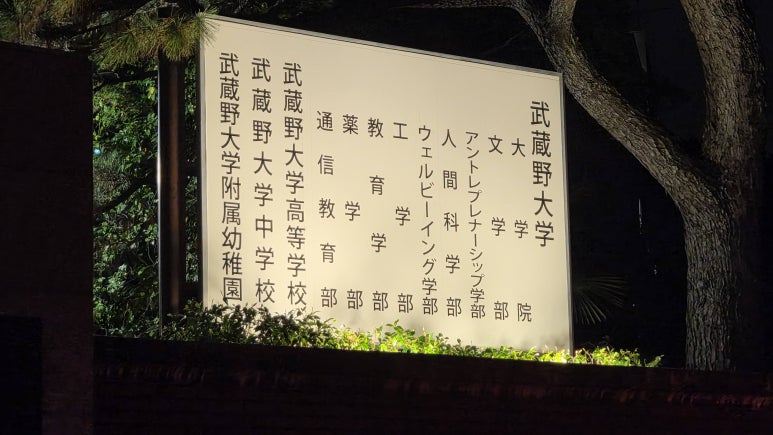
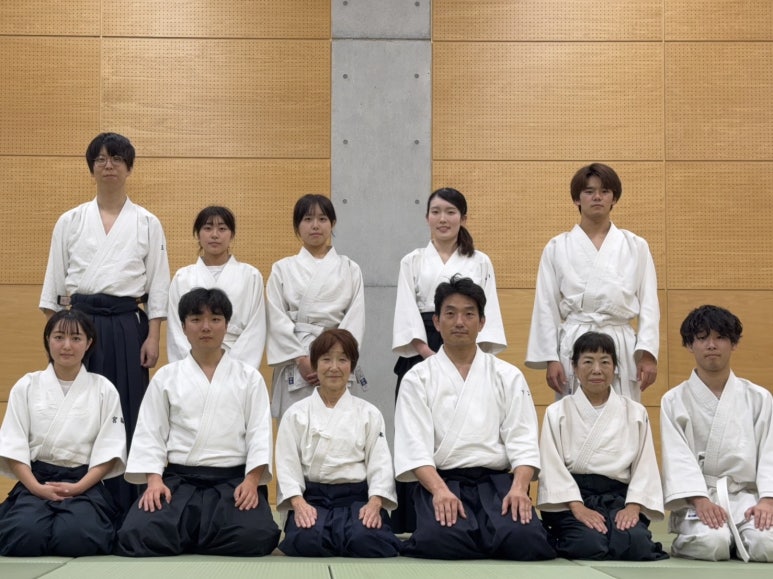
This time, I also visited the Musashino University Aikido Club, led by Kinoshita Sensei, who has guided me for many years, for the first time.
I’ve known Kinoshita Sensei for about 20 years now, but our schedules never quite matched up, so I never had the chance to participate in his training.
This time, finally, the timing worked out.
Since there were many beginners at that day’s training, Kinoshita Sensei guided us step by step, starting from the most fundamental content.
For me, that was actually a good thing.
As I followed along with the class explaining things to the beginners, the fine details that I usually pass over unconsciously came into view again.
Where do you place your feet?
Where do you keep your center?
How do you grip your partner?
For someone just starting out, each of these points is crucial, but for someone who has trained for a long time, they become something you take for granted at some point without even realizing it.
One of the words I thought about most during this Japan trip was precisely “basics.”
What Is Good Ukemi?
This time, I also heard an interesting story from Yamashima Sensei.
One of them was about my approach to ukemi (receiving, 受け), which I’ve worked on for a long time.
I’m on the larger side physically, and whenever I go to Japan, I often hear things like, “You’re big,” or “Do you train separately for weight training?”
Yamashima Sensei also told me that, despite having that kind of build, it’s a good point that I receive my partner’s technique softly.
Especially in Japan, I’ve tried to cooperate so that my movement doesn’t get cut off when my partner is practicing a technique, and to be as good a uke as possible.
But this time, I heard the following story.
Matching your partner well and receiving a technique as if it’s succeeded, even when it hasn’t actually fully succeeded, are two different things.
If you keep receiving well even a partner’s technique that is below your own experience or skill level, the partner may feel their technique is working perfectly fine and enjoy a pleasant training session.
But the question was whether that is really a good session for both people.
It is necessary to cooperate so your partner can practice.
But if I overdo it, receiving something that hasn’t actually fully succeeded as though it has, then it can no longer serve as accurate feedback for my partner either.
Another point he made was that I may be lowering myself below my own actual level.
Yamashima Sensei already has a higher level of technique and judgment than I do, and I myself am aware of that, but he asked why I keep trying to show off.
At times, rather than continually matching your partner, it’s also necessary to honestly show your own body and your own level.
Since I have such a strong sense in Japan of always being the one training under others, I may have been unconsciously hiding my own judgment or level more than necessary.
Respecting your partner and lowering yourself are not the same thing.
Actually, this is something I had been pondering on my own even in ordinary times back home.
What is good ukemi?
Whether you’re cooperating with your partner while still giving an honest reaction—this is something I’ll need to keep thinking about in my own future training.
Why I Go to Japan
A senior who has known me for a long time once told me something about why I need to come to Japan.
In Korea, I’m now a senior and a teacher guiding others, so who would honestly tell me when I’m doing something wrong?
So when I come to Japan, it’s not just about learning techniques—I also need to look back at myself.
After returning home, I heard something similar again.
If you step out of a familiar environment and place yourself in a different one, you may see sides of yourself that don’t normally show.
The reason I go to Japan isn’t to meet famous people, and it isn’t to be recognized by anyone, either.
There are people who will tell me when I’m wrong that I’m wrong,
And there’s an environment that makes me question the basics I thought were obvious once again,
And lets me use my body in ways I wouldn’t normally think of back home.
I think it’s necessary to occasionally put my body into a place like that.
Where People Connect With People
Of course, it wasn’t only about training.
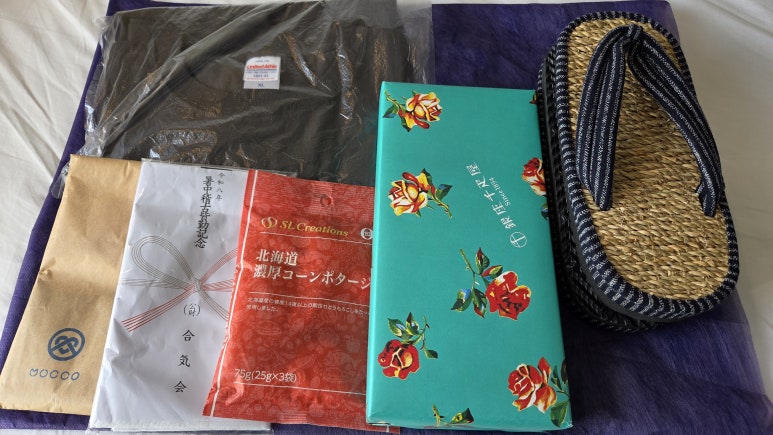
People I met at headquarters warmly greeted me, and there was time spent drinking coffee together, eating meals together, and exchanging small gifts.
Mr. H and I had a long meal at Nobori and shared many stories, not only about Aikido.
This time I also received soy sauce as a gift.
I received a dojo T-shirt from Kinoshita Sensei, and unexpected gifts from various other people I met at headquarters as well.
That’s also why, every time I go to Japan, I bring small Korean snacks or souvenirs with me.
Rather than as repayment to settle a price for something,
“Good to see you again,”
it’s closer to a small greeting that says that.
Having done Aikido for a long time, I’ve come to realize that what remains in the end isn’t just technique, but also the relationships between people.
It’s just that the relationship itself shouldn’t become the goal.
It’s not that you train in order to meet good people,
rather, by training well for a long time, relationships with good people naturally follow.
I think that order matters more.
Back to Training at the End
At the very end of this trip, I also took part in a joint practice session with Yamashima Sensei and Chiyoda Aikikai.
I wrapped up this trip, which began at headquarters, by training and sweating together with various people at a different location.
And on the night of the 18th, I returned to Korea.
Looking back after the trip ended, it’s hard to point to any one particular special technique I newly gained this time.
Instead, I have the feeling that various small pieces have each found their place little by little.
During randori practice, I came to think about taisabaki again,
I was asked again why the basics should be done the way they are,
I experienced the generation before me trying to pass something on through their bodies,
And I came to think again about what good ukemi and self-expression really are.
In the end, it all comes back to the same question.
Am I training properly right now?
Back to Samseong-dong
Now that I’m back in Korea, I return to my daily life and training at Samseong-dong once more.
I’m not entirely sure what role I’ll play as I continue Aikido from here.
Honestly, my answer doesn’t change much each time I hear such stories.
I want to get even a little better at Aikido.
I want to understand it even a little more correctly.
And I hope the people who train with me can train together for a long time, without getting hurt, enjoying it, and sincerely.
If there is anything among what I’ve learned and experienced in Japan that can help, I want to share it with the people who train with me.
If someone is looking for a good training environment, I might be able to connect them with good people and good places that I know.
But I think the starting point of all of that is, in the end, my own training.
And that was something I confirmed once again on this trip to Japan.
Next time I go to Japan,
I hope that even the points I was corrected on this time will have improved a little,
and that the people I meet again will say,
“You’ve gotten a little better.”
That would make me happy.
Until then, I’ll keep training.
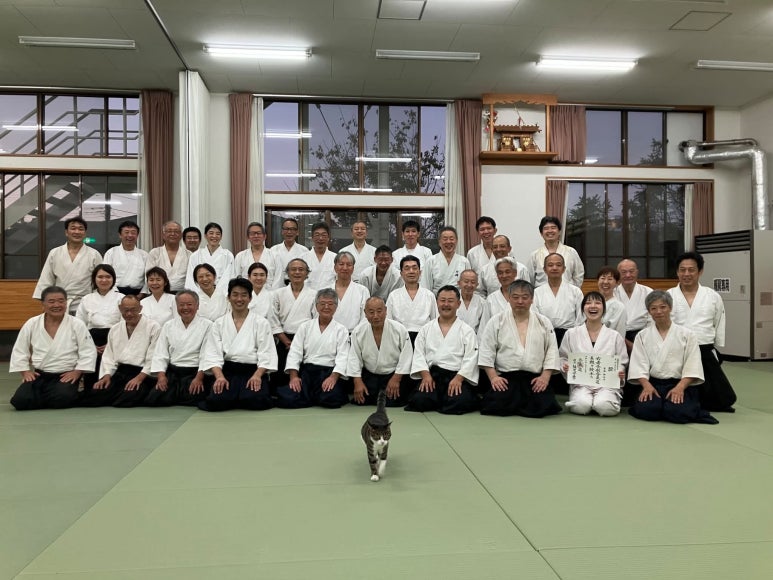
Thank you to everyone from the Japan delegation this time who trained with me, taught me, and warmly matched with me.
And thank you as well to the members who kept the training at Samseong-dong going while I was away.
I’ll see you again on the mat.




I enjoyed reading this. It reminds me of the saying that the purpose of reading a long novel isn’t to find out how it ends, but to experience the journey itself of entering and emerging from some vast “world.” Rather than a single, neatly converging lesson or realization, this feels like a record of a journey deep into the enormous world of Aikido, and back out again. A world built by great teachers and seniors far beyond my modest imagination, and one that all of us, at the far end of their legacy, are diligently following. Thank you for all your hard work.