The Largest Aikido Gathering in the Republic of Korea
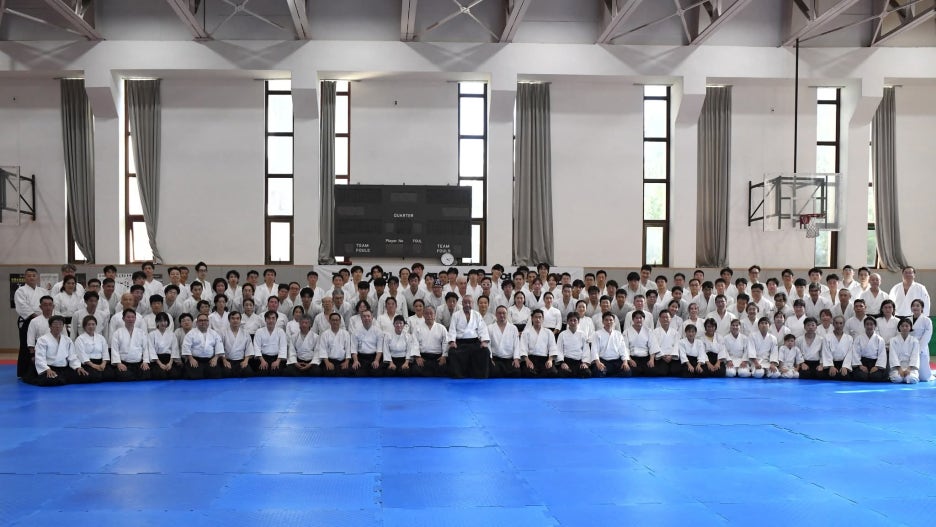
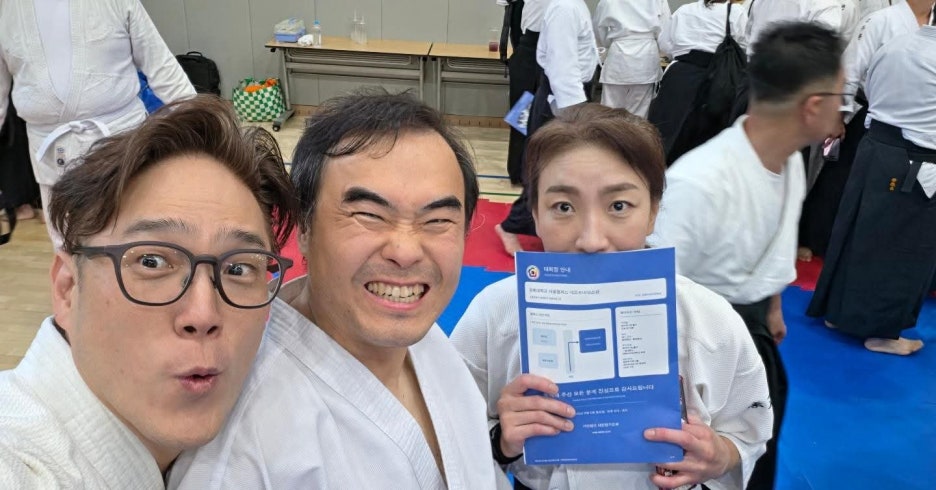
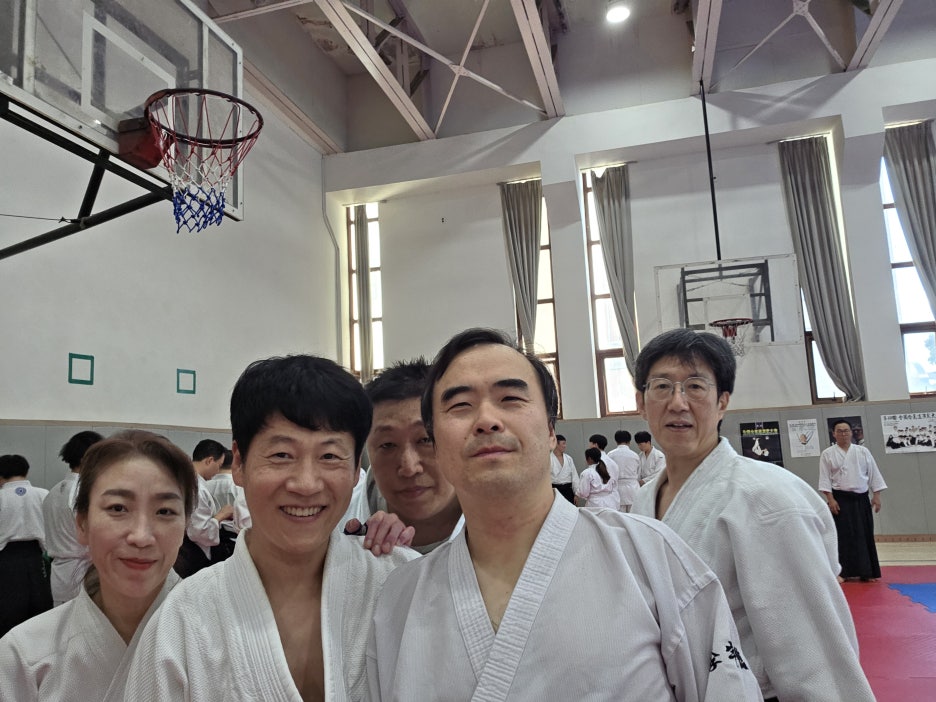
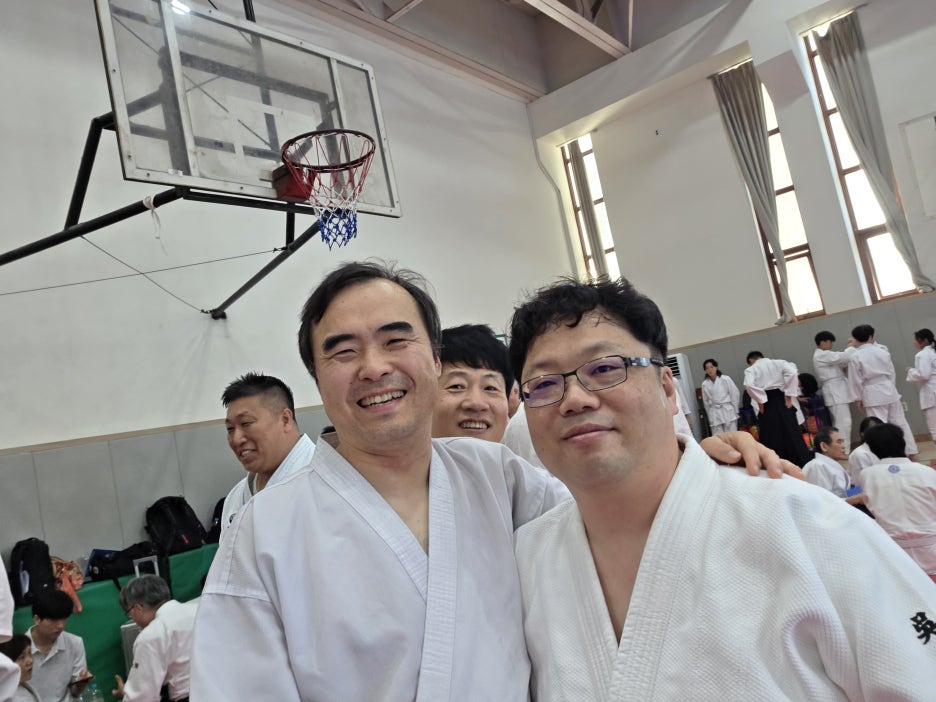
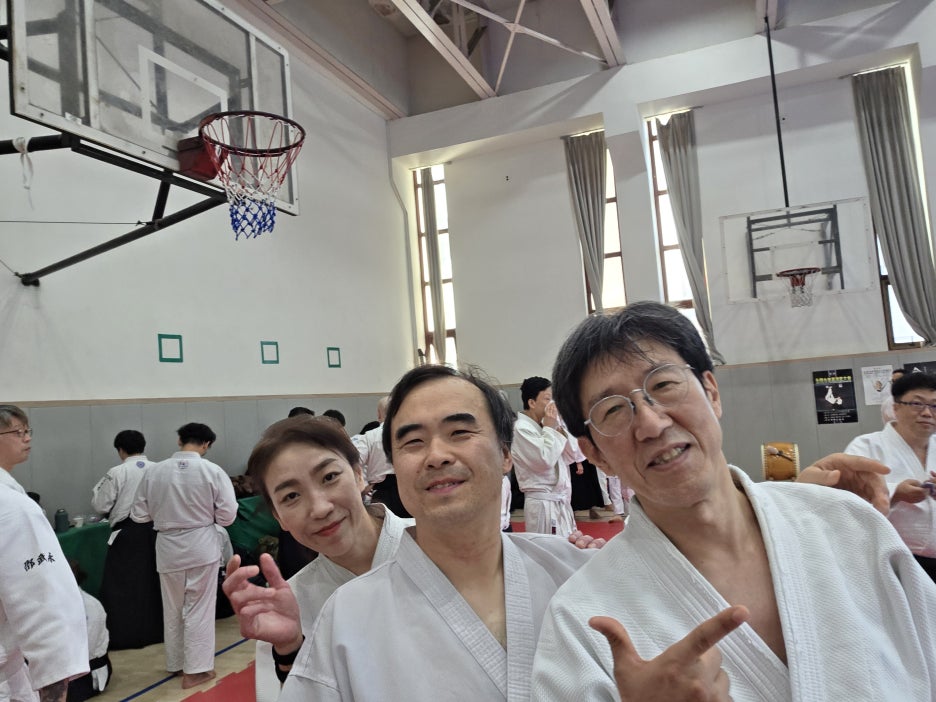
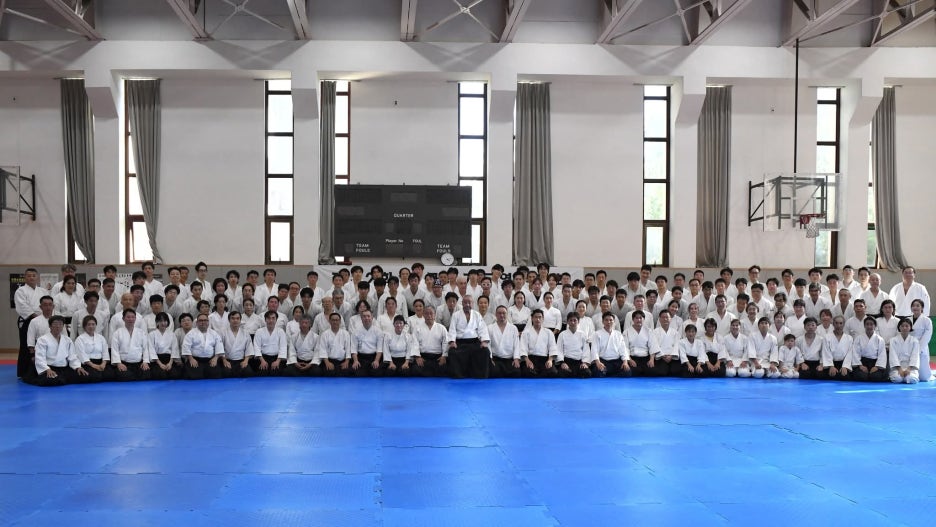
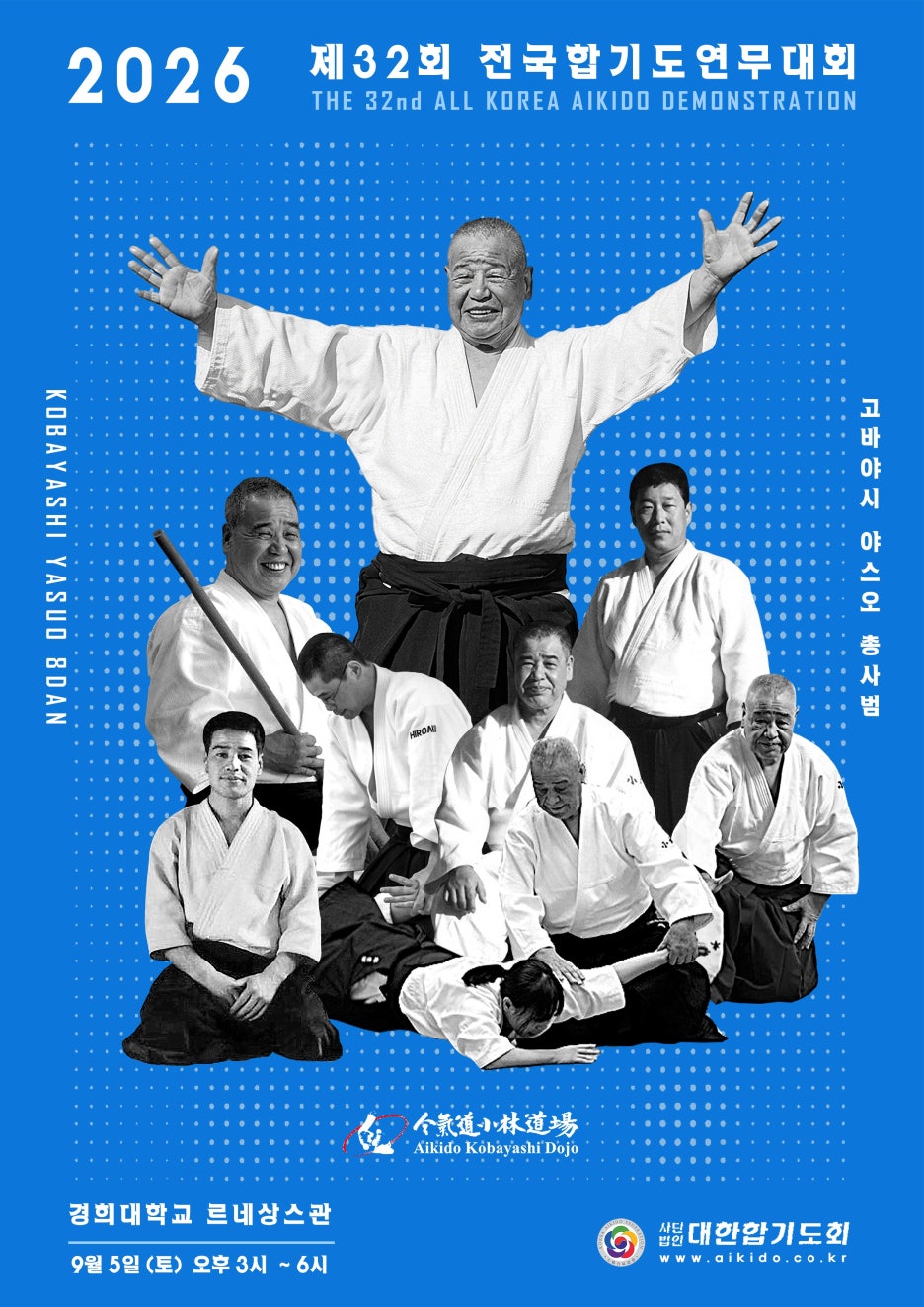
I attended the 32nd National Aikido Demonstration Competition hosted by the Korea Aikido Federation.
It is the largest Aikido event held annually in the Republic of Korea.
For new members, it can become the setting for what is known as a “meeting of Aikido matchmaking,” where they meet Aikido practitioners from all over the country and exchange greetings, while for advanced practitioners, it is also an occasion to share the direction of Aikido they have recently been immersed in with many others.
And this year, the master of the Republic of Korea Aikido, President Yoon Dae-hyun.
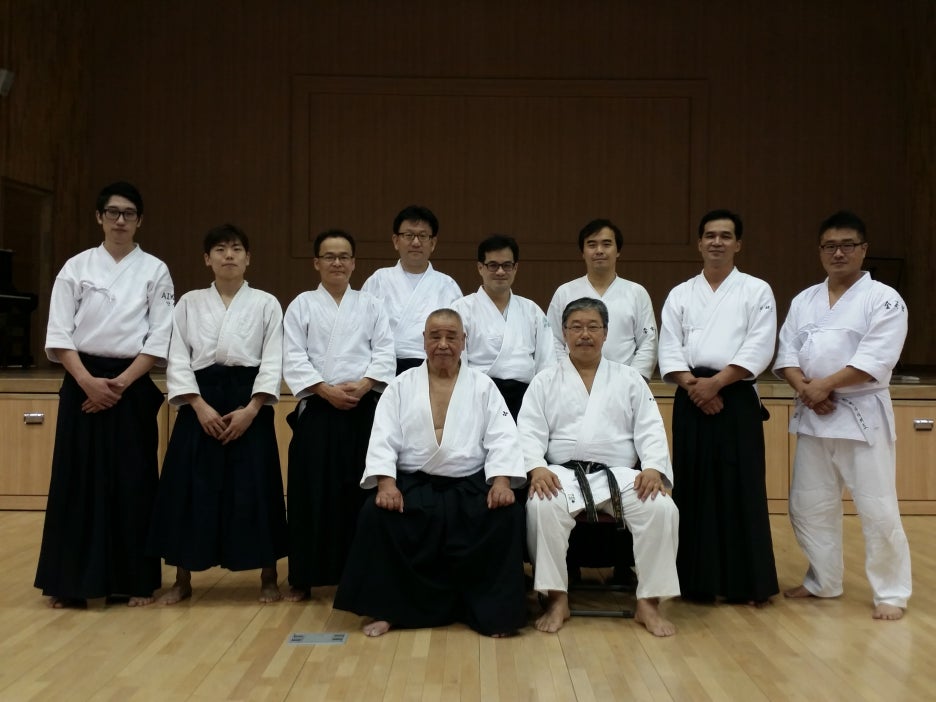
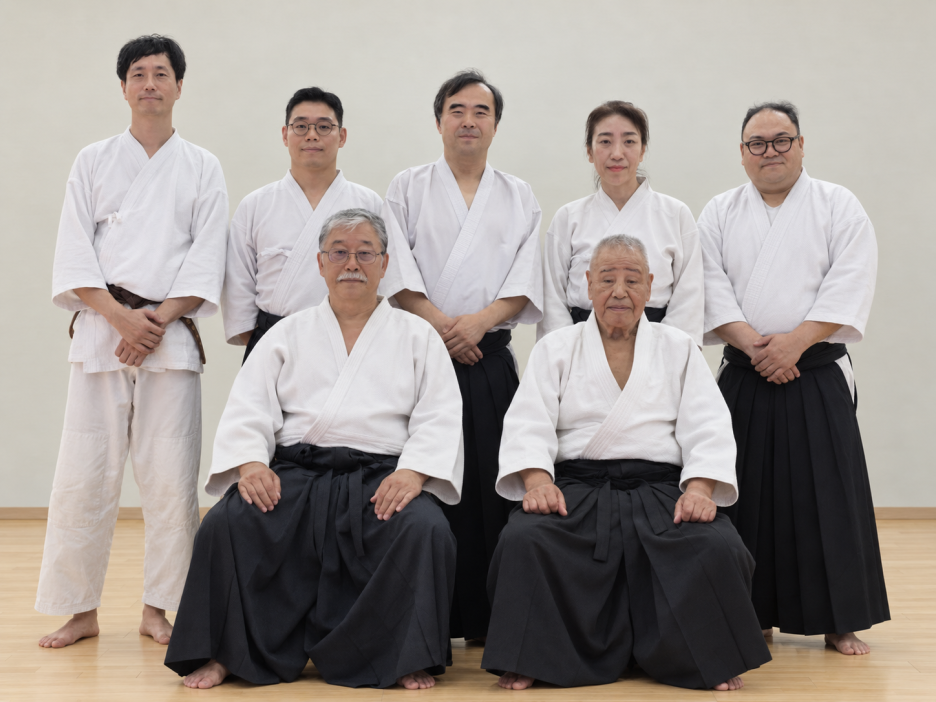
His teacher, Grand Master Kobayashi Yasuo, 8th Dan of the Kobayashi Dojo, visited Korea.
The memory of training under Master Kobayashi is still vivid, but time flies. He has now reached the age of 90, becoming what is known as a “venerable elder.”
I believe that the Republic of Korea’s Aikido exists because Master Kobayashi Yasuo existed.
And the fact that Master Kobayashi Yasuo himself came to Korea in person made this year’s demonstration competition an event that absolutely had to be attended.
A Martial Art with a Target — External Motivation
On the drive to the demonstration competition, I had a conversation with one of our dojo members about “motivation.”
I’ve long been interested in archery (Guk-gung, Korean traditional archery), and while sharing stories, I learned that this member had practiced Guk-gung for a long time. He shared memories of traveling to participate in archery competitions on the way to demonstration events.
I had always thought I’d like to try archery sometime, but I never had the chance to actually find an archery range.
But as we talked, he naturally introduced me to it, and I decided to give archery a real try.
I haven’t yet had the chance to actually shoot an arrow, but just from hearing about it, it felt like the world of archery and the world of Aikido were remarkably contrasting, each revealing a distinct character.
It might sound like an all-too-obvious observation, but—
Archery has a target.
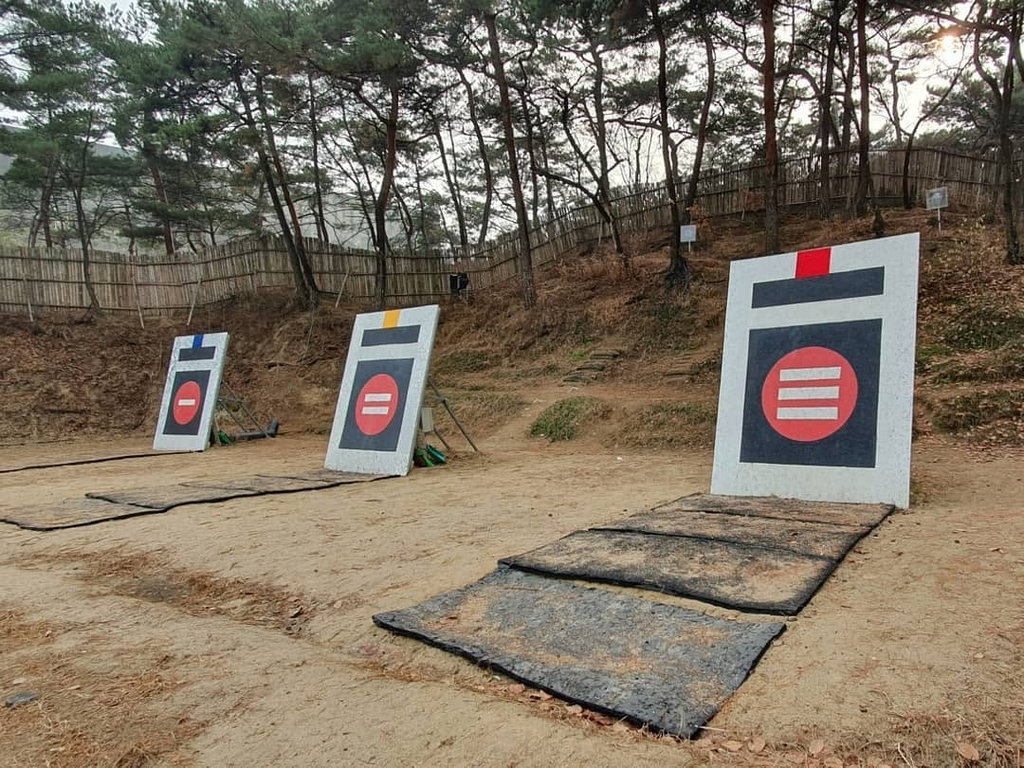
Whether an arrow hits the target or not is extremely clear. How many arrows were shot and how many hit the mark are recorded as data, and based on those results, the next stage is determined. Even the practitioner themselves can confirm very clearly how much they have progressed.
It’s extremely intuitive.
In fact, it’s so intuitive that it’s almost cruel. Hitting the target with all five arrows out of five shot is called a “mongi” (perfect score), and only by recording a mongi do you achieve “jeopjang” (qualification). And only once you achieve jeopjang do you gain the eligibility to challenge for 1st Dan.
He told me about people who have struggled for years, unable to get past this stage.
Everything is concentrated on the target. Everything revolves around the target.
Fundamentally, everything is set in motion through an “external motivation.”
A Martial Art Without a Target — Inner Motivation
Aikido, however, is exactly the opposite.
Aikido, too, has promotion tests and ranks. There are examinations, and there are demonstration competitions.
There are also technical standards set through the World Headquarters and the Kobayashi Dojo.
The forms of the techniques gradually improve, and there are moments when a movement that used to be difficult suddenly becomes natural.
There are also people who, through Aikido techniques, experience the dramatic feeling of escaping from danger.
But none of that is well expressed as a number. There’s no quantitative score generated.
There are Dan/Kyu ranks and attendance days, but these don’t represent an absolute measure the way archery’s target does.
There’s no count of how many times you threw your partner, and there’s no standard that says you must succeed at a technique within a certain number of seconds.
There’s no such thing as winning a match and receiving a medal.

.jpg?type=w1)
This may well be the very part that beginners find most bewildering when they first start Aikido.
People generally prefer results that are visible to the eye.
When there is a goal, and a reward given upon achieving it, even a difficult process becomes easier to endure.
When your records improve, or your rank rises, or you win a match, or the target in front of you is pierced by an arrow, you have a reason to try again.
But Aikido doesn’t have much of that kind of external motivation compared to the arrow of archery.
Even after training diligently, it’s not something you can use to beat someone else, and it’s not something that ends once you’ve mastered a single technique. A technique you thought you had mastered with difficulty becomes unfamiliar again once your partner changes, and just when you think you understand the phrase “let go of your strength,” you suddenly discover your whole body is tensed up with force.
It’s difficult. It’s not intuitive. Even basic movements aren’t easy to follow.
Inner Motivation as Vast as the Number of People
At this demonstration, I was deeply moved watching the performances of Mr. and Mrs. Hayashi and Master Kasahara Yuji.
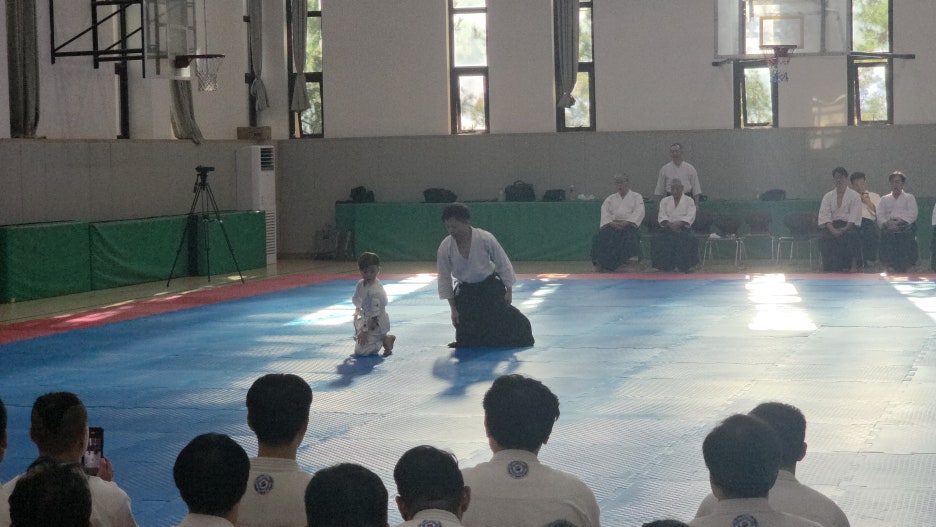
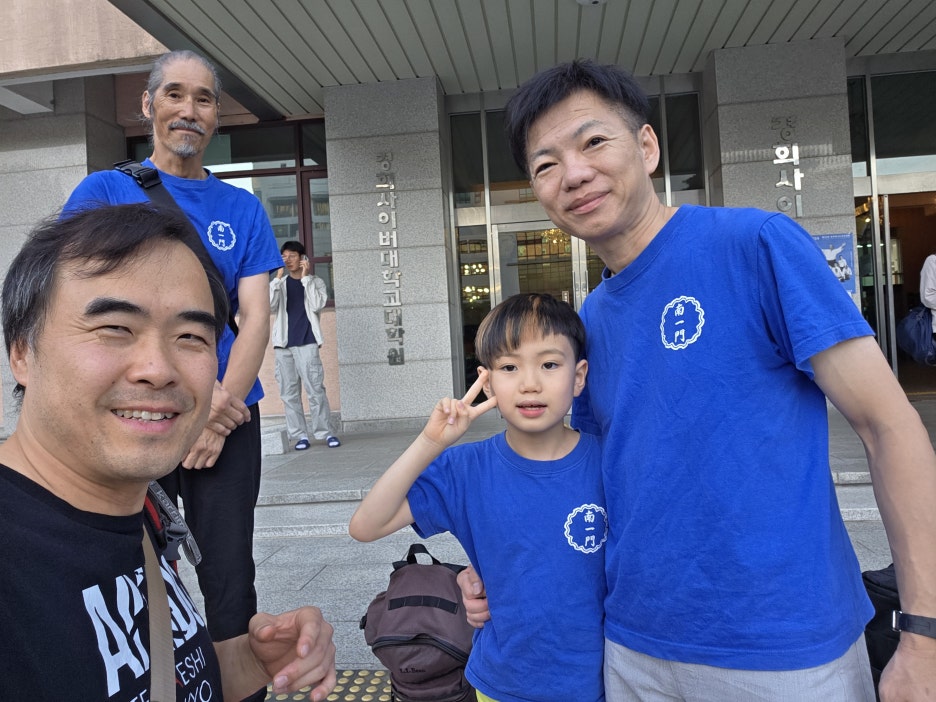
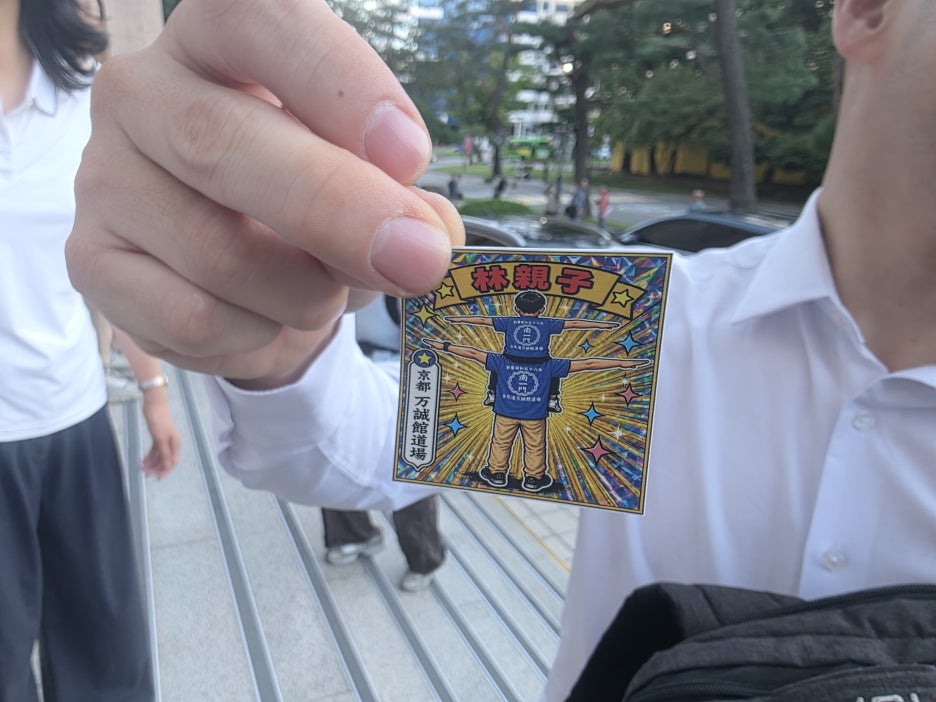
Even within the same Kobayashi Dojo lineage, the color of Korean and Japanese demonstrations was quite different.
Korean demonstrations are cautious.
It’s not that the range of motion in the techniques is low, but rather that it felt as if each person sets their own boundaries for what kind of demonstration they will allow themselves, and moves only within them. Even within the system of Aikido, which was created to avoid competition, it felt as if a kind of technical competition was still taking place. This isn’t a bad thing either—it’s a driving force that allows for steady growth.
But in the Japanese-side demonstrations, I could see the performances of people who had found “their own inner motivation.”
To put it one way, I could also say it looked “far more free.”
Ordinary external motivation is presented by the organizers hosting the training. It becomes the motivation that gets the training started. It is the core principle that governs the training.
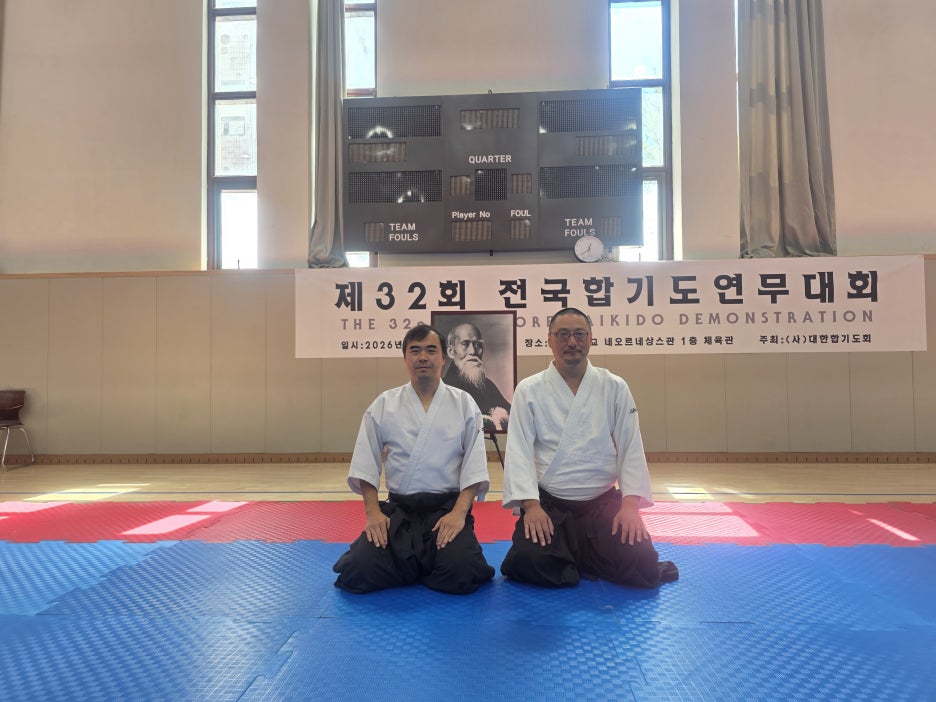
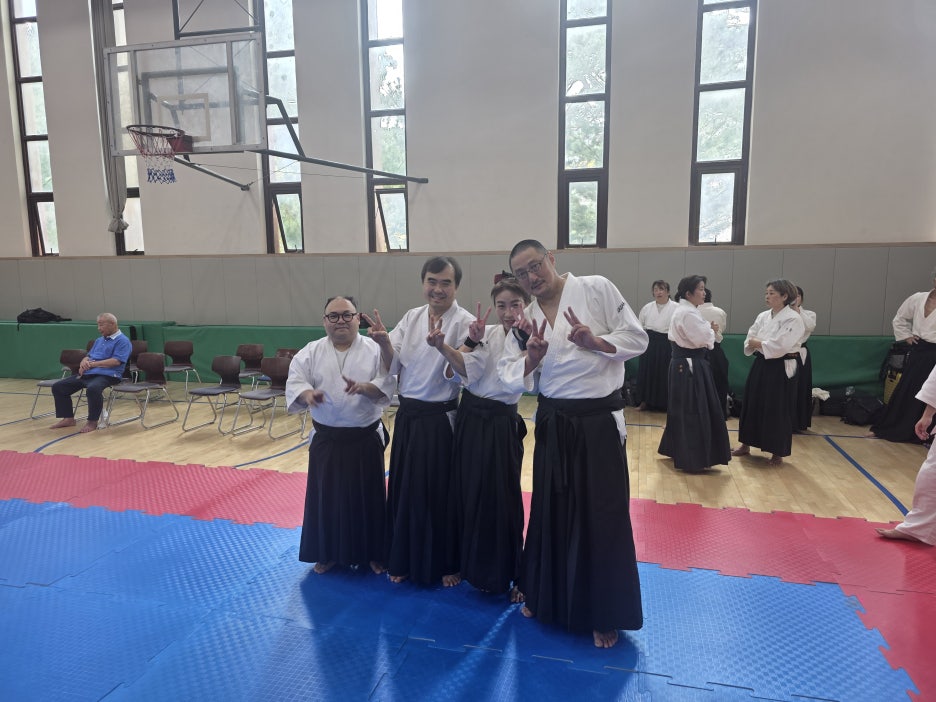
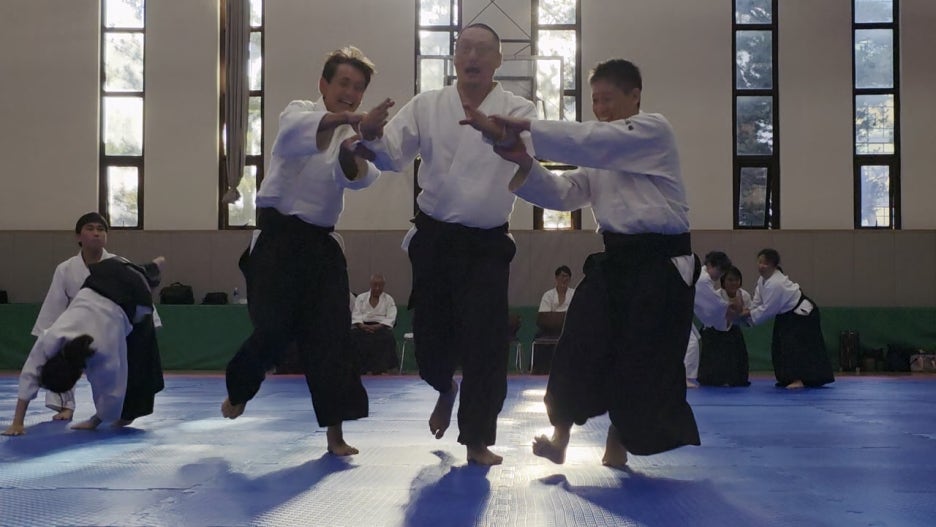
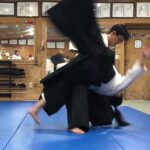
It was a bold demonstration in which two people took turns throwing one another far toward the audience.
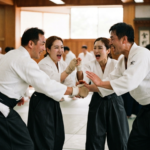
But inner motivation differs from person to person. There exist as many kinds of inner motivation as there are people. In the performance of Mr. and Mrs. Hayashi. In the beautiful teamwork of Mr. Hayashi and his son. In the performance of Master Kasahara Yuji. In the joyful pair who performed a manse (cheer) and threw each other toward the audience. In the performance of Master Yoon Dae-hyun. In the couple’s demonstration where they bickered playfully while still radiating the tension unique to a married couple.
And in the performance of the 90-year-old grand master, whose smile never left his face, we saw an inner motivation as vast and varied as the number of people who had gathered here.
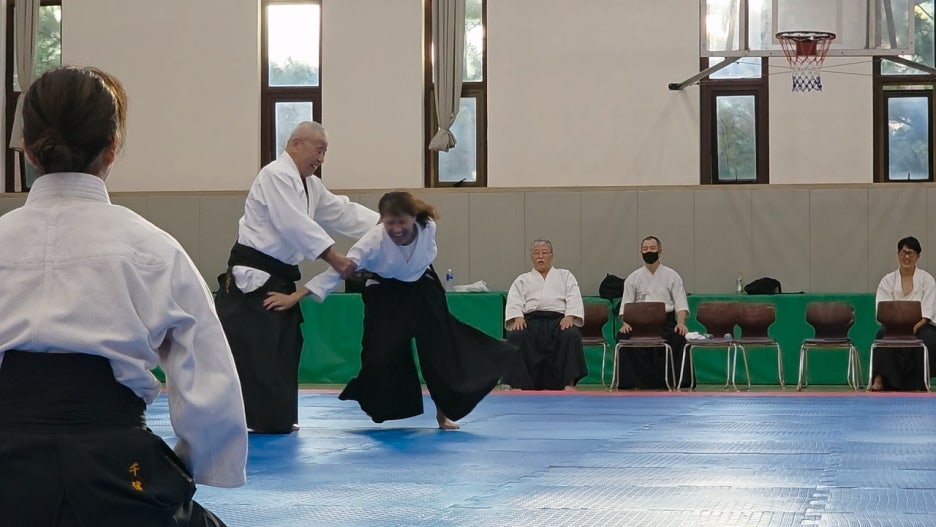
And Master Kobayashi Yasuo, who directly proves that fact.
“I’m Glad Aikido Exists”
In their performances, I could see something clear that seemed to say, “I’m glad Aikido exists!!” Having trained in Aikido for a long time, they seemed to have discovered where their own joy lay, and showed that joy to people in their own way.
More than the form of the demonstration. More than its composition. More than its technique.
The joy and heart of the person performing was conveyed first and foremost.
Perhaps that is exactly the shape of the inner motivation that allows one to train in Aikido for so long. It’s not about a goal set from outside, but rather knowing which part of Aikido you personally love, and gradually deepening that discovery through training and performance.
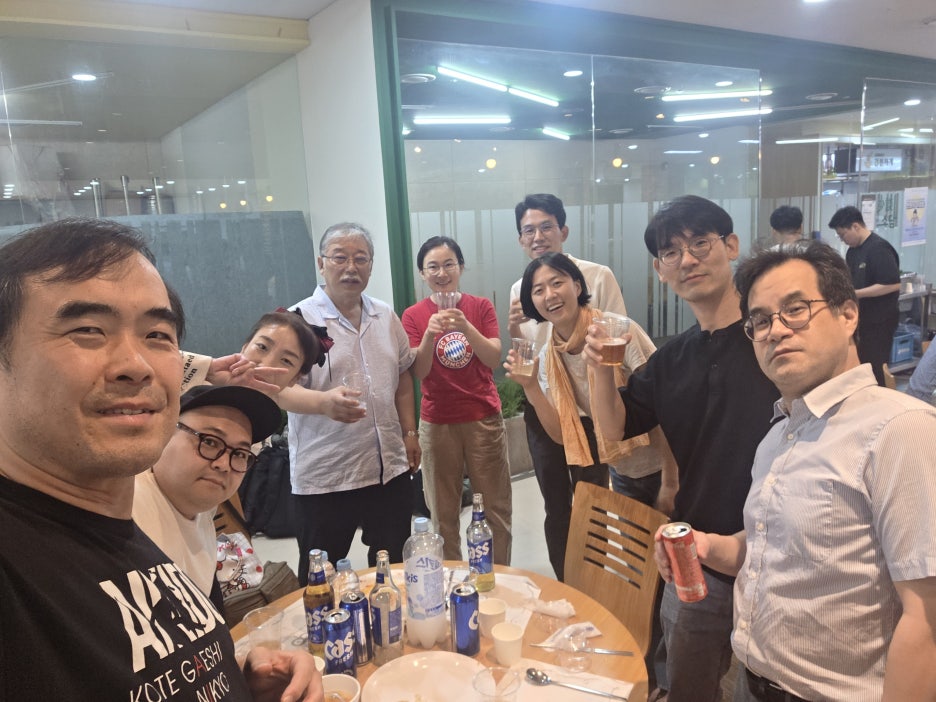
What the Performance of a 90-Year-Old Showed Us
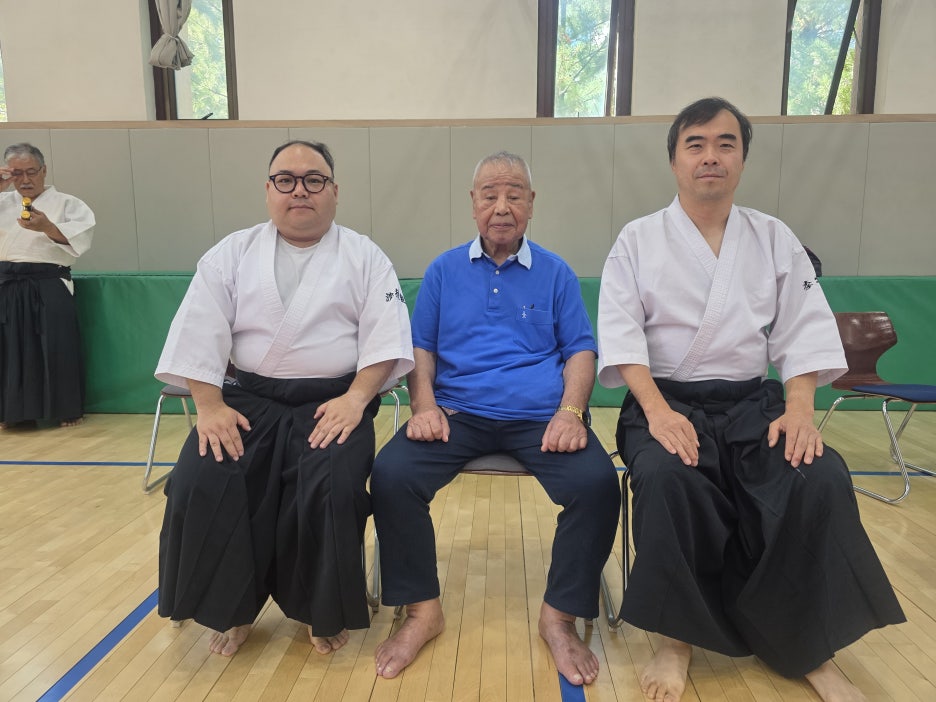
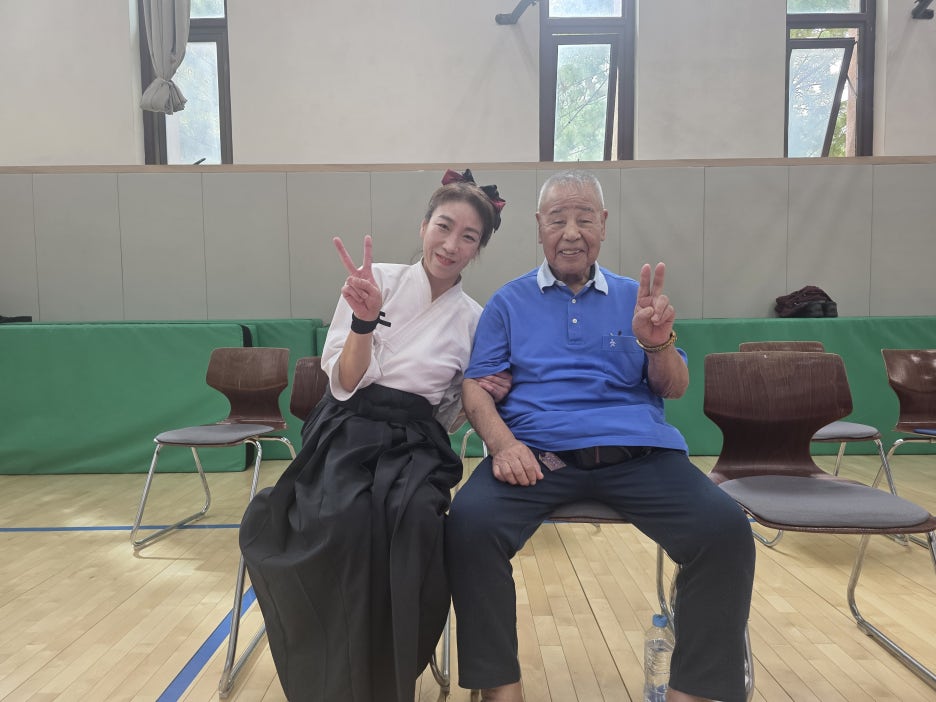
Watching the lecture and performance of Master Kobayashi Yasuo, who celebrated his 90th birthday at this event, I found myself thinking about this even more.
The age of 90 itself speaks volumes. And he is not someone who simply trained for a while in their youth, but someone who has carried one martial path throughout an entire lifetime.
Because Master Kobayashi Yasuo existed, the Republic of Korea’s Aikido exists.
And it was beyond doubt that the very presence of Master Kobayashi Yasuo has become a powerful inner motivation for every single individual in today’s gathering of Korea’s Aikido community.
At Master Kobayashi Yasuo’s training seminar at age 80, it was already remarkable to see an 80-year-old grand master personally demonstrating falls and leading the seminar himself; but seeing him, at 90, still leading a seminar and still personally demonstrating falls himself, there was surely no one who was not moved.
Master Kobayashi’s performance wasn’t about showing off some kind of accomplishment—it felt more like showing just how far and how long a person can walk down a single path. The very fact of training together with Master Kobayashi felt like an answer in itself.
A Victory Completed on the Mat
Lastly, I cannot leave out the performance of Regional Director Moon Young-chan of Jeju.
Even amid a prolonged battle with cancer as it has become chronic, he still got up on the mat to complete his performance. Many people who watched his movements shed tears. The very fact that the Director performed his demonstration on the mat even while battling terminal cancer was in itself a victorious performance, a performance that moved us all. Seeing his fighting spirit against illness gave us a greater sense of inspiration than watching any match victory. It was a moment to cheer him on with all our hearts.
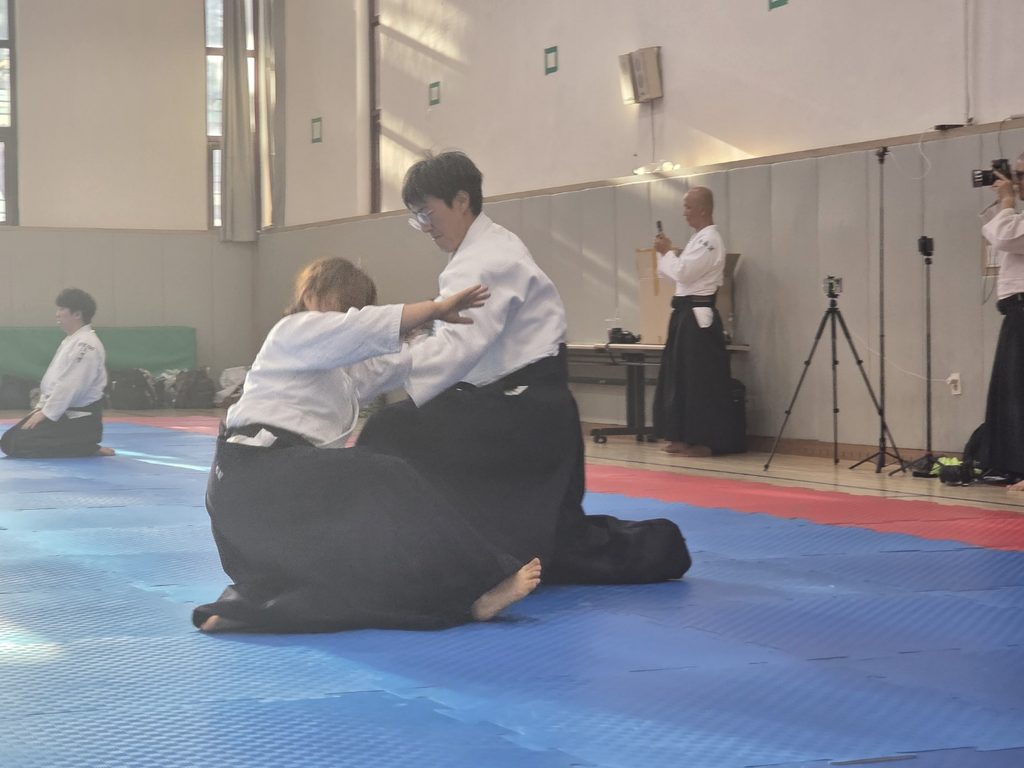
He received a warm round of applause both at the start and the end of his performance.
We wish him strength and a full recovery.
The Destination of Aikido
Where is the destination of Aikido?
Is it completing the technique? Is it becoming stronger? Is it obtaining a higher rank?
Or is it achieving founder Ueshiba Morihei’s “world peace,” which no single individual could ever fully accomplish?
Or is it perhaps the road to achieving an Aikido so perfect that one could declare, “This truly is Aikido”?
Perhaps there is no answer to this question to begin with, not even from the very start.
What I saw at this year’s National Aikido Demonstration Competition was not flashy techniques nor perfectly completed movements.
It was the performances of people who had discovered which part of Aikido they loved,
and the sight of a warrior who, even at the age of an “elder,” still put on his dogi and stood before people.
It was the sight of a victor who is overcoming a long battle with illness through training.
The hearts of all these people were sincerely conveyed to us.
May We Be Able to Continue Aikido Even at 90
“May all of you be able to continue Aikido even at 90!!”
These words that Master Kobayashi Yasuo urged upon us have remained in my heart the whole time since.
Yes. I will surely make that happen. I will make it so, without fail.
To everyone who attended the 32nd National Aikido Demonstration Competition, I send my heartfelt regards.





Such a touching post! I really enjoyed reading it.
You’ll definitely be able to do it. Let’s do a demonstration together to celebrate your 100th birthday someday.
I read your post and found it really moving. One of the reasons I love Aikido is that it’s a “path of freedom.” Within all its diversity—intensity and severity, joy and connection, power and precision, destructive force and consideration—this unity of contradictions moves toward the ultimate beauty of love and freedom. That’s probably why, once you fall into it, you can never get out.