“What matters more than talent is taking action.”
People come to the dojang to “sign up.” Most of them are adults. “I probably won’t be able to come every day, but I’ll come at least 3 times a week.” That’s the promise they make when they register.
Words are easy to say. Everyone seems to think the same way, but taking action is hard. Anyone can think it, but following through is difficult, and thinking about it doesn’t mean you’ll act on it.
Running a dojang, I’ve noticed that the excuses for not exercising largely fall into four categories: “I’m too busy,” “I’m still healthy,” “I’m too old,” and “I have no talent.” This article ties those four excuses together one by one, and shares what I’ve learned from experience at the dojang about how adults can ultimately find a way to exercise consistently.
Where does the reason for not exercising begin?
After registering, people show up eagerly for the first few days. They come in as if on fire, just like someone taking a black belt test, more eager than anyone else.
But sustaining that isn’t so easy.
I’ve learned once again, here at the dojang, just how important it is to make the effort to keep that mindset and that determination going.
When exercise becomes easy to skip, people start creating excuses for why they can’t exercise. They convince themselves that today they simply can’t make it, no matter what. To justify making excuses of various kinds, they look to their busy reality and to work obligations, and everyone comes up with their own fitting reason.
Excuse 1: “I’m too busy” — how busy office workers can still exercise
Everyone is busy
“I’m an office worker. I have to go to work at 8am and work until 6pm. It’s really exhausting. Even after all that work, my company duties don’t end there. When I get home, I have to play with my kids, and spend time with my wife or husband too. Sometimes I need to meet friends, and as part of my social life, I have to build relationships with people I meet. Learning something new is just too much for me. If I ever have some spare time or mental energy, then maybe I’ll think about it again. But even three times a week is too much for me to manage.”
Being busy isn’t really a new excuse at all. If anything, it’s probably the very first excuse behind every new challenge people face. It seems like there isn’t a single person in this world who isn’t busy. No, in fact, everyone is busy.
Even just looking at a business owner who came for a black belt test five years after registering at the dojang, she is incredibly busy. She has to get up at dawn to see her husband off to work and her kids off to school, and after handling the busy housework, whenever she gets a spare moment, she comes to the dojang to catch her breath.
What about office workers, then? With the daily grind of work and stress, it seems like there’s no way they could possibly spare time for themselves.
A day has only 24 hours, and a week only 168. The time available for myself doesn’t even amount to one hour a week. This situation never changes.
What if you build exercise into your daily schedule?
So what if you incorporated exercise into your daily or weekly schedule? What if, out of the 168 hours in a week, you set aside certain days and designated at least once a week for exercise, treating it just like any other task?
I’ve heard that for the woman who has been coming to the dojang for 12 years, her weekly schedule includes exercising at the dojang as part of her routine. She says that rather than exercising whenever she happens to have leftover time, including it in her daily schedule made it much easier to maintain. She says that because she built exercise into her daily schedule, she’s now able to keep exercising, whereas before, if work didn’t finish, she couldn’t even go home or meet friends.
The way to exercise consistently lies right here.
- Don’t exercise only when you have spare time — instead, turn exercise into part of your schedule.
- Set specific days. Even once a week is fine.
- Treat that time just like you would treat work.
If you have the courage to fold exercise into your schedule, you’ll be able to exercise about 1 to 3 times a week. For busy people, “how much” exercise you do may not actually matter that much.
What truly matters is taking action. Once I consistently keep doing it, changes begin to appear in my body and in my surroundings. The world starts turning in my favor, in the direction I decide and act toward.
Excuse 2: “I’m still healthy” — when should you start exercising?
The claim that light exercise alone is enough
“So far, no one around me — especially none of my friends — has died or fallen seriously ill, and even when I get a health checkup, there’s nothing particularly concerning. The people around me who don’t exercise, and who still drink and smoke, are still doing fine health-wise. Even just light, casual exercise is enough for me. Why bother exercising diligently?”
Exercise is something you do while you’re healthy
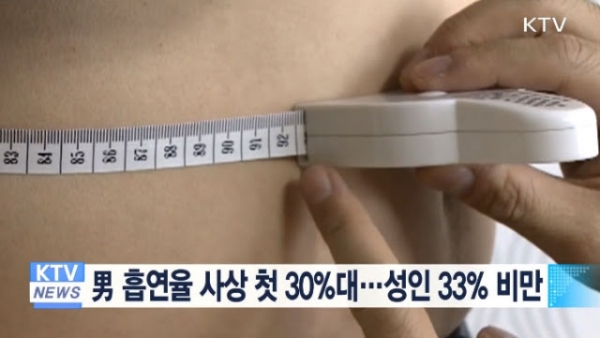
You need to exercise while you’re still healthy. Even if your fitness drops after being sick with a cold just once, it takes quite a while to build it back up to your previous level. Moreover, if your health deteriorates due to lack of exercise, you’ll need to invest far more effort and cost to recover to a fitness level where you can exercise at all.
Exercise is something you do while you’re healthy.
While you still have your strength, while you still consider yourself healthy — if you don’t exercise now… how on earth is someone who has lost the strength to move supposed to exercise later?
If you haven’t yet found the courage to learn a specific sport, then at least go walk and jog enthusiastically at your neighborhood school’s athletic field.
Exercising after a long time away leaves your whole body sore from muscle pain. But it feels good precisely because that muscle soreness comes from a healthy body. If your body is unwell, even just a breeze touching your skin can hurt.
There’s a saying that if you lose your health, you lose everything. Walk vigorously while you still can walk, and run vigorously while you still can run.
Excuse 3: “What kind of exercise at my age?” — how many years can you keep learning?
An inquiry call from someone in their thirties
One day, a call came in to the dojang.
Caller: Hello?
Master: Yes, this is the dojang.
Caller: Is that dojang for children Aikido? I’m a bit older than that. Can someone my age still learn Aikido?
Master: Sure, but how old are you, if you don’t mind my asking?
Caller: I’m in my thirties. My whole body is stiff — can I still learn to exercise?
Master: Of course you can learn. Please come visit the dojang.
These days, if you go to a gym where you can learn martial arts or Aikido, it’s mostly made up of elementary school students. That’s exactly why calls like that come in, and that kind of inquiry doesn’t feel particularly strange either.
Most people who come to a dojang aren’t sure what Aikido even is and come to find out. There are also cases where people heard about it from another dojang. Most people who heard about it from another dojang say they were flatly turned down after being told, “We don’t have an adult program at our dojang.”
Our dojang trains people from their teens to their seventies
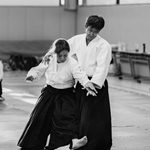
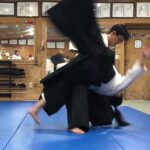
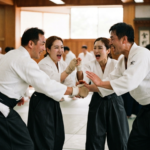
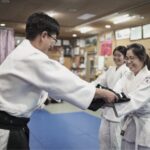
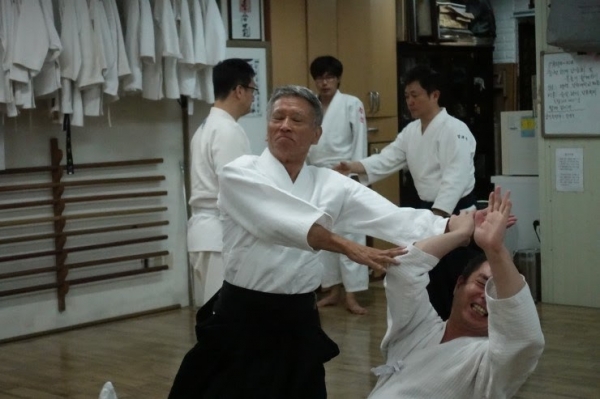
Our dojang trains people ranging from their teens to their seventies. There are people who come every day, but for those who are older, most come and exercise about 2 to 3 times a week and then leave.
Even so, many people give up on their own, saying, “What kind of exercise can I even learn at my age?”
Being older can actually mean learning more deeply
There are things that are actually easier to learn precisely because you’re older. While the body may be less flexible than it was in childhood, comprehension is faster, so the depth of understanding can be greater. That’s exactly why many older friends at the dojang understand things more deeply than their younger counterparts.
Rather than saying “age isn’t a problem when it comes to learning,” wouldn’t it be more accurate to say that being older can actually make it easier to grasp the true essence of Aikido?
Excuse 4: “I have no talent” — can even a clumsy person learn to exercise?
Everyone is clumsy at first
“How could I possibly learn to exercise? It’s frightening. I’m too clumsy to ever learn any exercise.”
Whatever you start doing, everyone is clumsy at first. Of course, there are people with truly extraordinary natural talent. But such people are truly rare, one in a thousand, and the person who finds one of them will be very lucky. So what about exercise, which requires using your own body directly?
People who are just starting out all envy the physical skill of their seniors. They don’t think about the time and effort those seniors invested behind the scenes — they just say that if they could do the same, they’d be willing to try hard too.
Do you think the seniors didn’t have a beginning too? They, and I as well, were both clumsy beginners once. Every day I ran out of strength and let out groans, and I spent my days frustrated, wondering why I couldn’t do it. Did I know from the very start that I would become someone skilled at exercise?
But even now, I’m still someone who isn’t good at exercise.
Don’t judge yourself prematurely
Nobody knows in advance whether they have talent or not. That’s why judging yourself beforehand is a foolish thing to do. It’s already a problem when others judge you, but an even bigger problem is judging yourself as incapable simply because you lack talent.
If I don’t believe in myself, who will believe in me? It’s not a matter of being skilled or unskilled. First, you have to believe in yourself.
Having talent is good. With that talent, you might achieve what you want, or it might help you accomplish things. It could even make your life more comfortable because of it. But talent isn’t some magical tool that can make everything you want to do come true.
Determination and resolve, passion and focus, positive thinking and courage, and belief — these many things become the tools that allow you to accomplish the challenges you take on. That’s why starting is easier than worrying about talent, and having the courage to start matters more.

Repetition overcomes talent
People start learning from the moment they are born. We start learning language through our parents, and we start learning social skills once we go to school. All of these things become mastered and learned through endless repetition.
It’s not that people are good at speaking or good at exercising because of some innate talent. They become skilled through relentless repetition.
What matters more than talent is taking action. What matters more than talent is having the courage to start. What matters more than talent is repetition that never stops.
Rather than giving up because you lack talent, you can become a better version of yourself by challenging yourself and taking action.
The way to overcome exercise excuses ultimately lies in action
Let’s bring up those four excuses once again: I’m too busy, I’m still healthy, I’m too old, I have no talent. Looking back, haven’t I also, at some point, hesitated in front of these very same excuses…?
There seems to be no special secret to exercising consistently. It comes down to building it into your schedule, starting while you’re healthy, not letting age hold you back, and not judging yourself prematurely. And simply coming out one more time today.
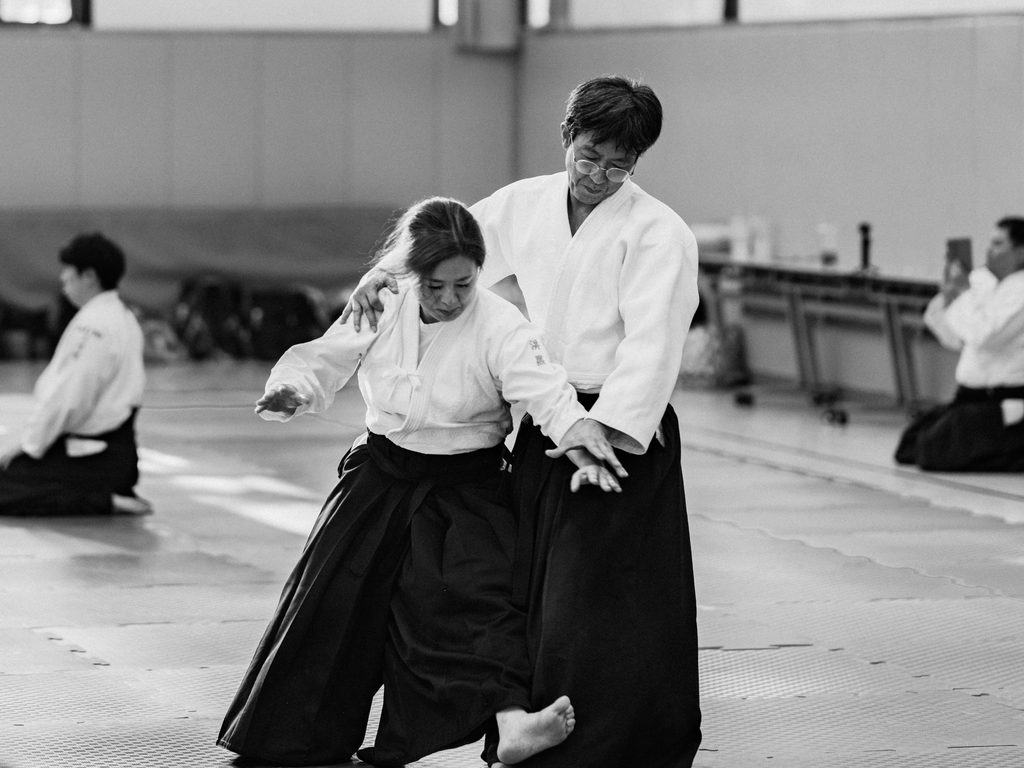
It’s perfectly fine even if you’re not a child. It’s fine to start just by walking to your neighborhood gym. But if you’re an adult who wants to learn Aikido, the dojang doors are open not just to people in their teens through their seventies, but to anyone at all, beyond that.
I’m putting on my dobok again today. To break through those four excuses mentioned above, I need to put on my dobok today as well.
#ExerciseExcuses #HowToExerciseConsistently #AdultAikido #AdultAikido #Aikido #JejuAikido #OfficeWorkerExercise #ExerciseHabits