Members sometimes ask me a certain question.
“Branch Master, people these days don’t really want to learn martial arts anymore, do they? Aikido is already difficult enough as it is — will it be okay?”
Honestly, I sometimes think the same thing myself.
Other martial arts gyms nearby also complain that people aren’t training the way they used to.
If even the major martial arts gyms are struggling, then lesser-known arts like Aikido or classical swordsmanship have it even harder, needless to say.
And yet, watching things unfold around me these past few years, my thinking has slowly started to change.
Just a few years ago, most new members were in their 20s and 30s.
These days it’s a bit different.
We’re seeing more inquiries from people in their 50s and 60s, and recently, someone in their 70s even registered as a member.
At first, this person cautiously knocked on our door asking, “Can I really learn something at this age?” Now they say it’s fun and come to the dojang almost every day.
Perhaps it’s precisely because they’ve reached an age where they personally feel their body isn’t what it used to be that they’ve come to recognize the value of learning to truly use their body.
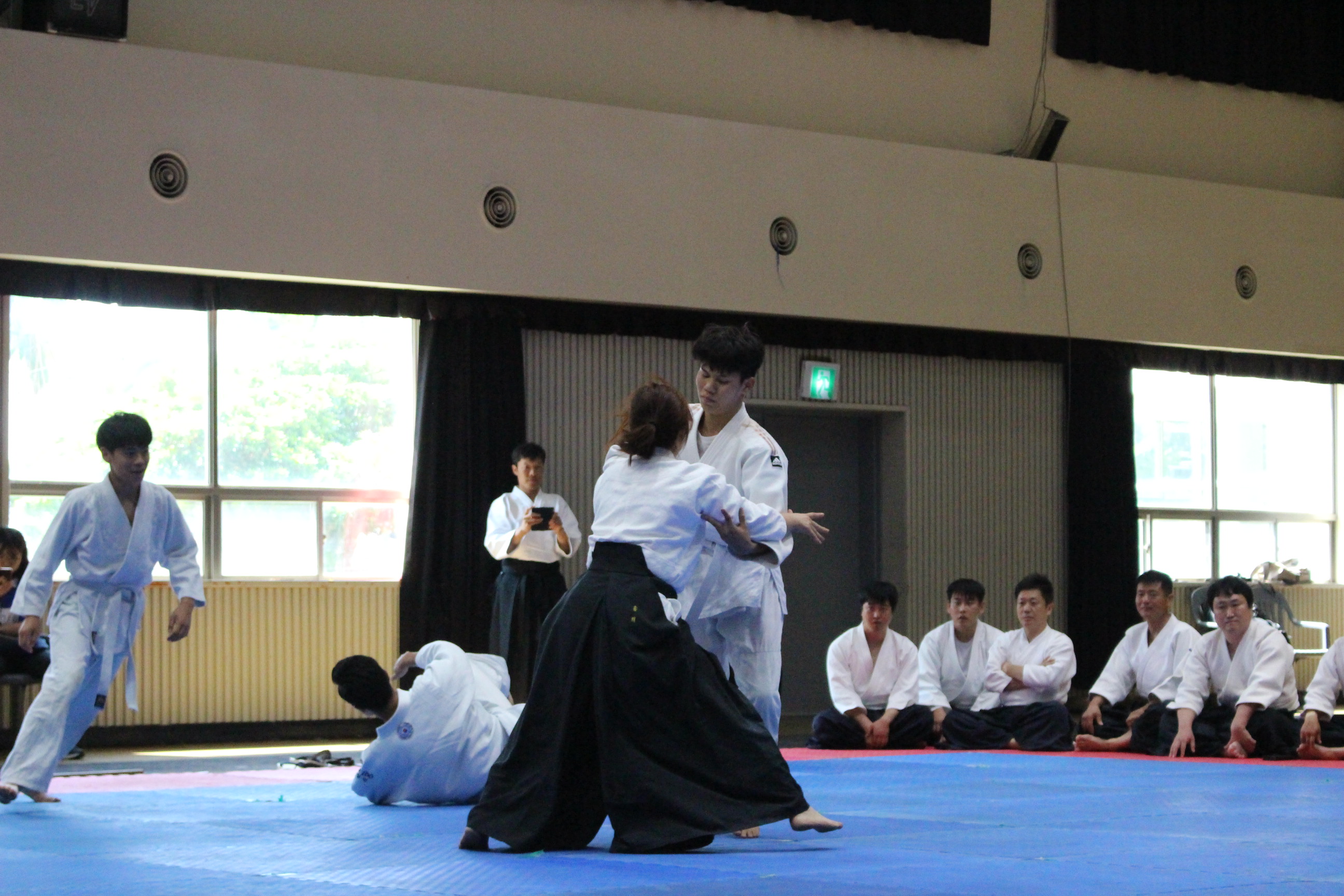
With the rise of YouTube, TikTok, and other media, everyone seems to spend their whole day staring at a screen.
As AI increasingly writes text for us and produces attention-grabbing videos on demand, more and more people find themselves stuck indoors.
In the end, it seems people only start craving hands-on, physical experience once their bodies have already broken down.
These days, more people are inquiring about our dojang after discovering Aikido or Katori Shinto-ryu through YouTube Shorts or TikTok clips than ever before.
In the past, someone would just wander in wondering what the place was as they passed by. Now, a single short clip on a screen is often what brings someone through the door.
Joint training with dojangs overseas, in particular, used to be extremely difficult to arrange.
Now, we can travel back and forth almost as casually as searching for a flight, checking in on each other and training together.
Even within Korea, exchanges with dojangs in Seoul, Daegu, Anyang, Chuncheon and other regions have been steadily increasing.
Training is no longer something we do alone — it’s become something we enjoy together.
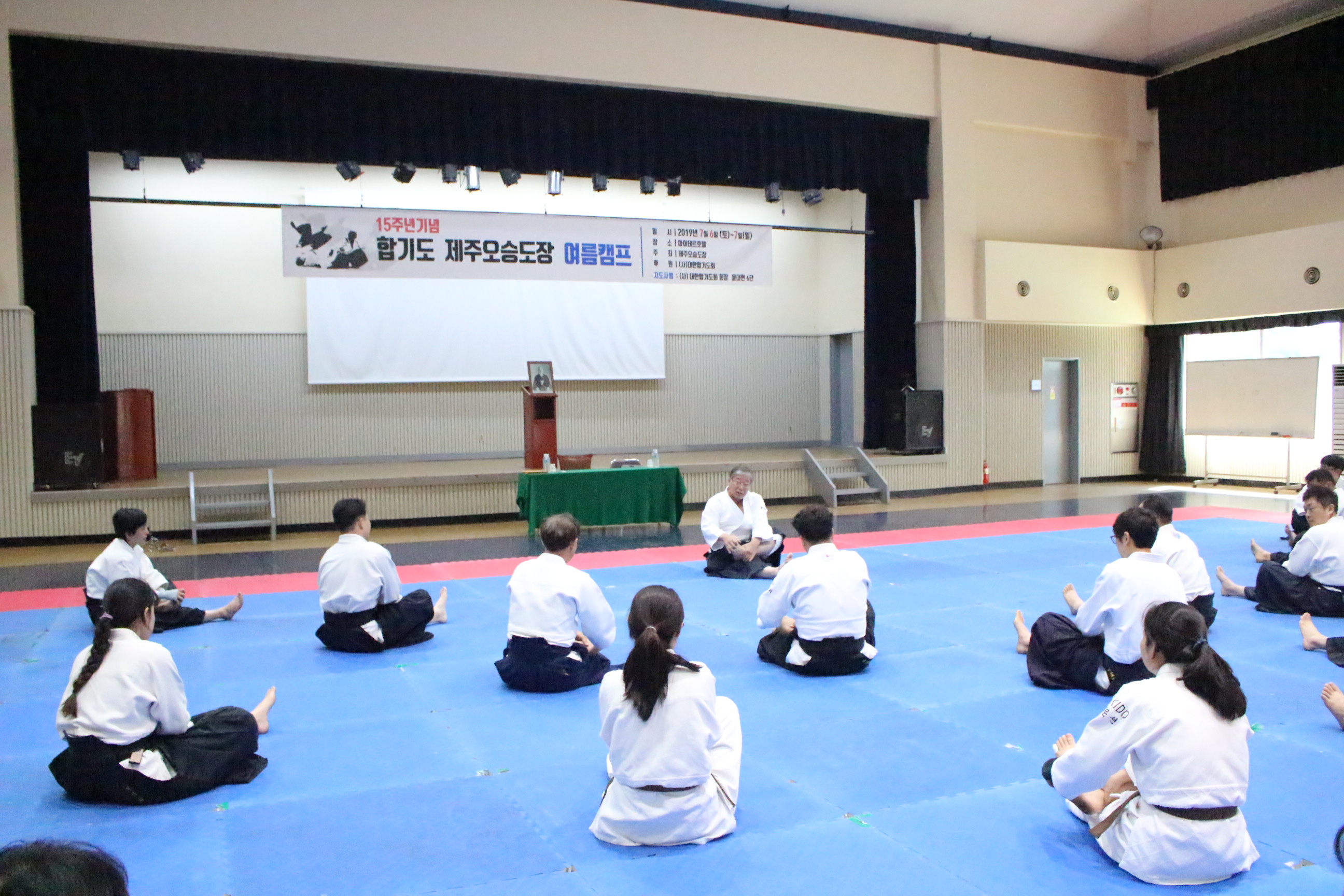
Of course, I’m not entirely optimistic.
There’s a constant tension between preserving authenticity in the old way of teaching and reaching people living in the modern era.
Training built around repeating fixed forms usually doesn’t offer the intense catharsis that comes from competition.
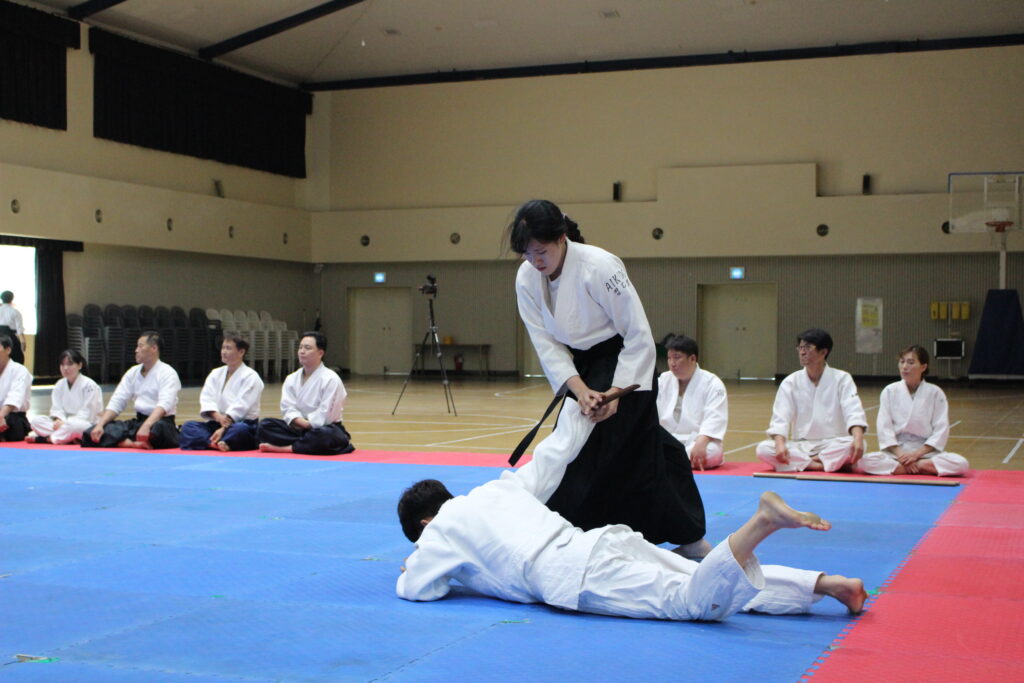
Aikido is a martial art where it takes months just to learn how to fall (ukemi), and a long time to advance even a single rank.
Whether this style of training can keep working for a generation used to instant results is, frankly, a challenge we still need to solve.
Even so, I don’t see a dark future for Aikido.
The reason is simple.
It’s because we have so many members who stay for years.
When you look at people who’ve been training steadily for 10 or 15 years, you realize that what people are actually looking for isn’t flashy technique, but a place they can stay for the long haul.
A place where you won’t get hurt, where you can keep training well into old age, and where you can build deep relationships with the people you train alongside.
I believe that’s the strength Aikido has that sets it apart from other disciplines.
No matter how far AI advances, it will never replace the sensation of two people learning through physical contact with each other.
If anything, I think that in an age racing toward the cutting edge, the value of an old-fashioned classical martial art will only shine brighter.
All we need to do is preserve that value while still making our doors easy for people living in this era to walk through.
Looked at that way, the outlook for Aikido isn’t bad at all.
If anything, maybe this is only the beginning.